Why Ainger Is Building a 600-Tonne Salt Reserve Before Winter
Posted on 14 October 2026
A snow removal salt reserve might look like a very large pile of material sitting around waiting for bad weather. For Ainger, it represents something much more important: preparation.
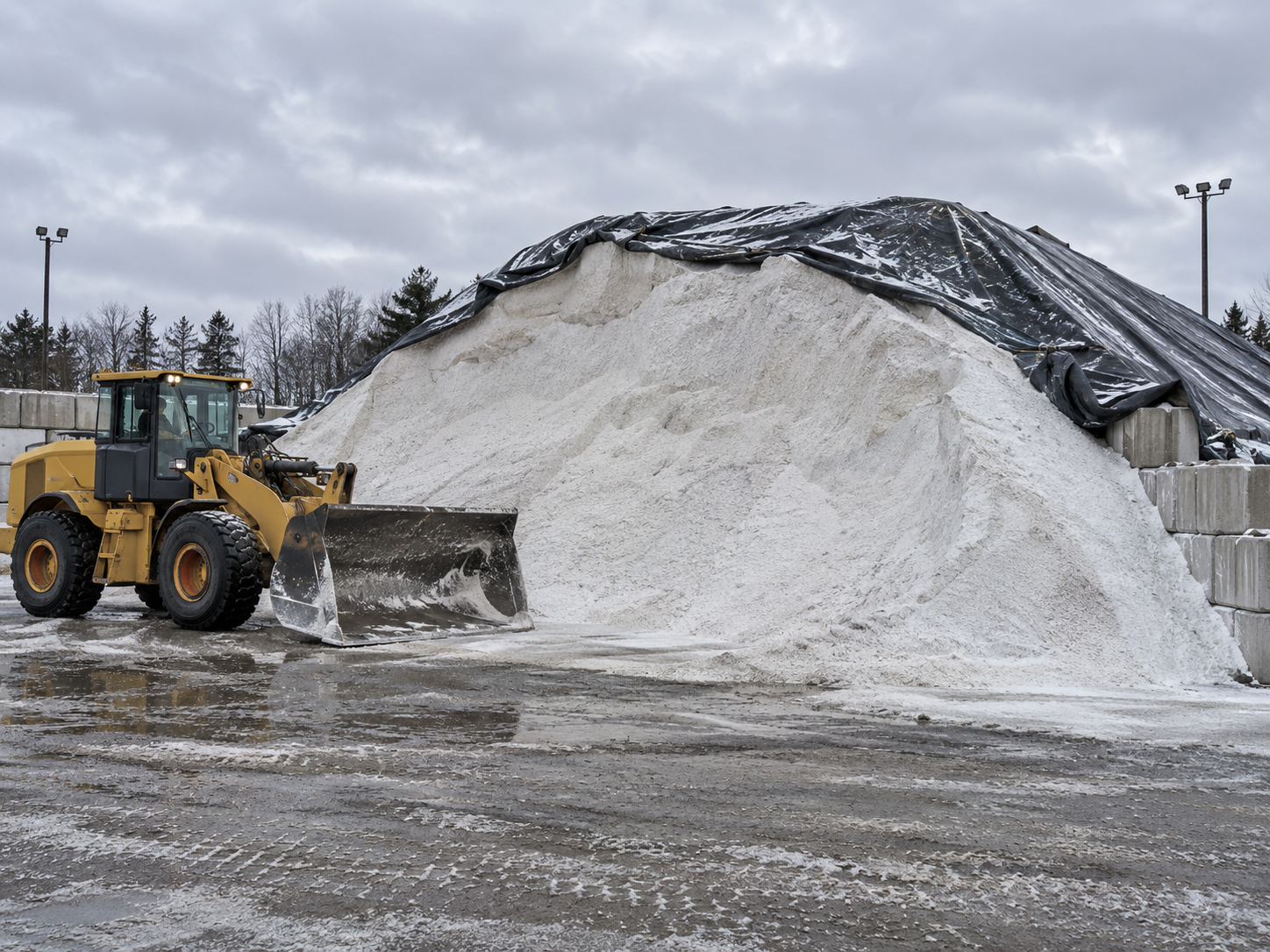
Before winter begins, Ainger is building toward a 600-tonne salt reserve to support our commercial snow and ice operations. The goal is not to use more salt than necessary. Instead, it is to reduce our dependence on last-minute supply and make sure our crews have access to the materials they need when winter conditions demand them.
For commercial property managers, that preparation can matter just as much as the plows, loaders and tractors they see working during a storm.
Why Build a 600-Tonne Snow Removal Salt Reserve?
Commercial snow management does not begin when the first flakes fall. Much of the work happens months earlier.
Routes need to be planned. Equipment needs to be prepared. Operators need to know the properties they will service. Materials also need to be available.
That is where Ainger’s snow removal salt reserve fits into the larger winter plan.
Instead of assuming salt will always be available exactly when we need it, we are preparing inventory before demand peaks. Building a substantial reserve gives our operation greater control over one of the materials used during commercial ice-management work.
It is the same reason contractors invest in backup equipment. Preparation creates options when winter becomes demanding.
600 Tonnes Is About Continuity, Not Overapplication
The size of the reserve is attention-grabbing, but the purpose matters more than the number.
A 600-tonne reserve does not mean the goal is to put as much salt as possible on every property. More material does not automatically equal better winter maintenance.
Instead, the reserve is about ensuring material availability across the season.
Commercial ice management should respond to actual property conditions, weather and the agreed service plan. Having salt available allows those decisions to be based on what the site needs rather than what happens to remain in inventory.
That distinction is important.
What Happens When Salt Demand Suddenly Increases?
Winter demand is rarely perfectly predictable.
One week may be relatively quiet. Then a widespread freezing-rain event, repeated freeze-thaw cycle or series of winter storms can increase demand across an entire region.
When many contractors, municipalities and property owners need winter materials at the same time, supply becomes much more important operationally.
Ainger’s approach is to prepare before that pressure arrives.
Building a snow removal salt reserve reduces how heavily our commercial operation needs to depend on finding additional material at the exact moment everyone else may also be looking for it.
Salt Supply Is Part of Commercial Snow Removal Planning
When property managers compare commercial snow-removal contractors, the conversation often begins with equipment.
How many trucks do you have?
Do you have loaders?
What happens if a machine breaks down?
Those are excellent questions. However, equipment is only part of the winter operation.
A contractor can have a beautiful fleet and still need the materials required to address icy conditions. Therefore, salt and ice-management supply should be considered part of operational capacity.
The plow handles the snow. The rest of the winter plan needs to handle what the plow cannot.
Snow Removal and Ice Management Are Different Jobs
Mechanical snow clearing removes accumulated snow from parking lots, drive lanes and other surfaces.
However, not every winter condition produces significant snowfall.
Freezing rain can affect a property with very little snow accumulation. Meltwater can also move across pavement during a warmer period and refreeze when temperatures fall.
Likewise, snow that becomes packed by traffic may create different surface conditions from fresh accumulation.
Therefore, commercial winter maintenance needs to consider snow and ice management together.
A salt reserve supports the ice-management side of that operation.
A Milder Winter Would Not Make Salt Planning Irrelevant
Our recent discussion around the developing 2026–27 El Niño is a good example.
Seasonal outlooks may suggest milder average conditions, but milder does not mean every day stays above freezing. Temperature changes can still create periods of melting and refreezing.
In some circumstances, those fluctuating conditions can make ice management especially important.
That is why Ainger prepares around operational needs rather than betting on whether one seasonal forecast produces more or less snow.
Winter still gets a vote.
Why Last-Minute Purchasing Creates Unnecessary Dependence
A contractor that buys winter material only when it is immediately needed becomes more dependent on outside availability.
That does not automatically mean material will be unavailable. However, it creates another variable during an already complicated winter event.
A reserve changes that equation.
By bringing material into our operation ahead of peak demand, Ainger can reduce dependence on urgent purchasing during difficult weather.
That supports a more resilient commercial snow-management system.
A Snow Removal Salt Reserve Supports Longer Events
Some winter events pass quickly. Others last much longer.
A property may require snow clearing while precipitation continues, followed by additional attention as temperatures change. Commercial routes can also contain many properties requiring service during the same event.
Therefore, contractors need enough operational capacity to continue working rather than treating every storm as one quick visit.
Salt inventory is one piece of that capacity.
A substantial snow removal salt reserve helps support continued commercial operations during prolonged or repeated winter events.
It Also Matters When Storms Arrive Close Together
Winter does not always provide a polite recovery period between storms.
One system may finish while another approaches several days later. Meanwhile, existing snowbanks remain, equipment needs servicing and properties may experience refreezing between events.
During periods like these, winter contractors can use materials quickly.
A strong reserve gives the operation more breathing room between events rather than making every storm another urgent procurement cycle.
Why Property Managers Should Care About Contractor Inventory
A property manager does not need to know exactly how many tonnes of material sit in a contractor’s storage facility every morning.
However, asking how a snow contractor plans its supply is reasonable.
The bigger question is:
Does my contractor have a plan if winter demand becomes unusually high?
Salt inventory is simply one visible piece of that answer.
Property managers should also ask about equipment redundancy, staffing, storm monitoring and communication.
Reliable winter service depends on several systems working together.
Salt Supply Does Not Replace Good Equipment
A warehouse full of salt cannot plow a parking lot.
Likewise, a fleet full of plows cannot treat every ice condition.
Therefore, the 600-tonne reserve should be understood as one part of a broader operational strategy.
Ainger’s winter planning combines equipment, operators, material supply, route planning and communication. Each element addresses a different potential pressure point.
Preparedness works best when it has more than one layer.
Backup Equipment and Salt Inventory Solve Similar Problems
At first glance, backup equipment and salt storage seem unrelated.
Operationally, however, they serve a similar purpose: reducing dependence on one point of failure.
If one machine develops a problem, additional equipment gives crews another option.
If winter-material demand increases suddenly, existing inventory gives the operation another layer of resilience.
Neither eliminates every possible winter challenge. Instead, they give the operation more ways to respond when something does not go according to the simplest plan.
Commercial Snow Management Is a Supply-Chain Business Too
People understandably picture snow removal as trucks moving through parking lots at night.
Behind those trucks is a much larger operation.
Fuel needs to be available. Equipment needs parts and maintenance. Operators need to be scheduled. Winter materials need to be sourced and stored.
Therefore, commercial snow management includes logistics and supply planning alongside the work happening on the property.
The contractor your customers see during a snowstorm is supported by decisions made weeks or months earlier.
Salt Storage Is Really About Being Ready Before the Phone Rings
The worst time to begin preparing for a winter event is after it has already started.
That principle applies to equipment, staffing and materials.
By building our 600-tonne snow removal salt reserve before winter, Ainger is making one of those preparation decisions early.
When conditions change, crews should be focused on servicing properties rather than scrambling to solve predictable supply questions.
Preparation is rarely the most dramatic part of snow removal. Usually, that is exactly the point.
Does A Large Salt Reserve Guarantee There Will Never Be a Problem?
No responsible winter contractor should make that promise.
Weather can create unexpected conditions. Equipment can fail. Transportation and supply chains can experience problems. Every winter operation has limits.
The purpose of preparation is not to pretend those risks disappear.
It is to reduce unnecessary vulnerability.
A 600-tonne reserve gives Ainger greater internal capacity than relying entirely on last-minute purchasing. Backup equipment gives us more options than depending on one machine.
Planning does not make winter predictable. It makes the operation better prepared for unpredictability.
Responsible Salt Use Still Matters
Maintaining a large reserve does not change the goal of responsible application.
Salt should be part of a planned ice-management strategy, not something applied simply because plenty is available.
Conditions, surfaces, temperatures and the individual property all influence winter-maintenance decisions.
Therefore, inventory and application should be treated as separate questions.
How much material do we have available?
and
What does this property need right now?
are not the same thing.
600 Tonnes Gives Our Commercial Team More Control
One of the biggest advantages of advance preparation is control.
A contractor cannot control the weather.
However, contractors can control how much equipment they prepare, how routes are planned, how staff are organized and how much winter material they secure before demand rises.
That is what the salt reserve represents for Ainger.
It is one more part of the winter operation we can prepare before conditions become difficult.
What Property Managers Should Ask About Salt Supply
Salt availability may not appear near the top of a typical snow-removal checklist, but it deserves a place there.
Before signing a commercial winter agreement, property managers can ask:
- How does the contractor plan winter salt supply?
- Does the contractor maintain its own reserve?
- What happens during prolonged ice events?
- How does the contractor respond when material demand increases?
- How is salt application incorporated into the service agreement?
- Is ice management included or billed separately?
- How are treatments documented?
- What backup plans exist for equipment and material supply?
- Who can approve additional work during changing conditions?
A contractor should be able to explain the operational plan behind the service.
Why This Matters for Collingwood and Georgian Bay Properties
Commercial properties around Collingwood and Georgian Bay can experience changing winter conditions throughout the season.
Snow may be the most visible challenge, but temperature changes, packed surfaces and refreezing can affect a property even between major snow events.
Therefore, winter readiness should extend beyond plow capacity.
A commercial contractor also needs the resources to manage the conditions that remain after the snow has moved.
For Ainger, building a substantial salt reserve is part of preparing for that broader responsibility.
Snow Removal Salt Reserve Planning Is Really Client Planning
The easiest way to understand the 600-tonne investment is to look at it from the property manager’s side.
Our commercial clients are not hiring Ainger because they want to know that we own salt.
They are hiring us because they need their properties managed when winter conditions arrive.
The reserve supports that promise by increasing the amount of winter material already under our operational control.
That can help reduce reliance on urgent supply purchases and support continuity when demand increases.
Preparing Snow Removal Salt Reserves Before Winter Arrives
By the time the first difficult event arrives, many of the most important winter decisions should already have been made.
Equipment should be prepared.
Routes should be planned.
Operators should understand their properties.
Communication procedures should be established.
And critical winter materials should already be part of the operational plan.
That is why Ainger is building a 600-tonne snow removal salt reserve before winter.
It is not about creating the biggest pile for a photograph.
It is about building a winter operation with enough depth to keep responding when conditions become demanding.
Learn more about commercial snow removal in Collingwood and our broader commercial snow removal services.
You can also follow Ainger Group on LinkedIn for behind-the-scenes winter preparation, commercial property-management tips and seasonal updates.
Planning commercial winter service? Request a commercial snow removal quote.