Collingwood Commercial Snow Removal: Business & Property Guide
Posted on 25 August 2026
Managing a commercial property during an Ontario winter takes careful planning. Businesses near Georgian Bay face lake-effect snow squalls, fast temperature drops, and frequent freeze-thaw cycles. Therefore, standard plowing may not provide enough protection. Full-service Collingwood commercial snow removal helps property managers keep buildings safe, accessible, and open throughout winter.
Condominium boards, industrial operators, and retail plaza owners also have different needs. A complete plan must cover parking lots, walkways, loading areas, rooftops, and ice control.
The Commercial Winter Challenge in Collingwood and Simcoe County
Collingwood’s location creates fast-changing winter weather. Cold winds can move across Georgian Bay and produce narrow bands of heavy snow. As a result, one area may receive 20 to 30 centimetres of snow while a nearby area receives much less.
Temperatures also move above and below freezing throughout winter. During the day, melting snow can send water across parking lots. Then, overnight temperature drops can turn that water into black ice.
For these reasons, commercial properties need more than post-storm plowing. They need ongoing weather monitoring, ice control, and a clear response plan.
Collingwood Commercial Snow Removal and Ice Management Services
Every property has different traffic patterns, operating hours, and safety risks. Therefore, our commercial plans combine heavy equipment with detailed hand clearing. Crews focus on the areas that matter most to each business.
Parking Lot Plowing and Fleet Operations
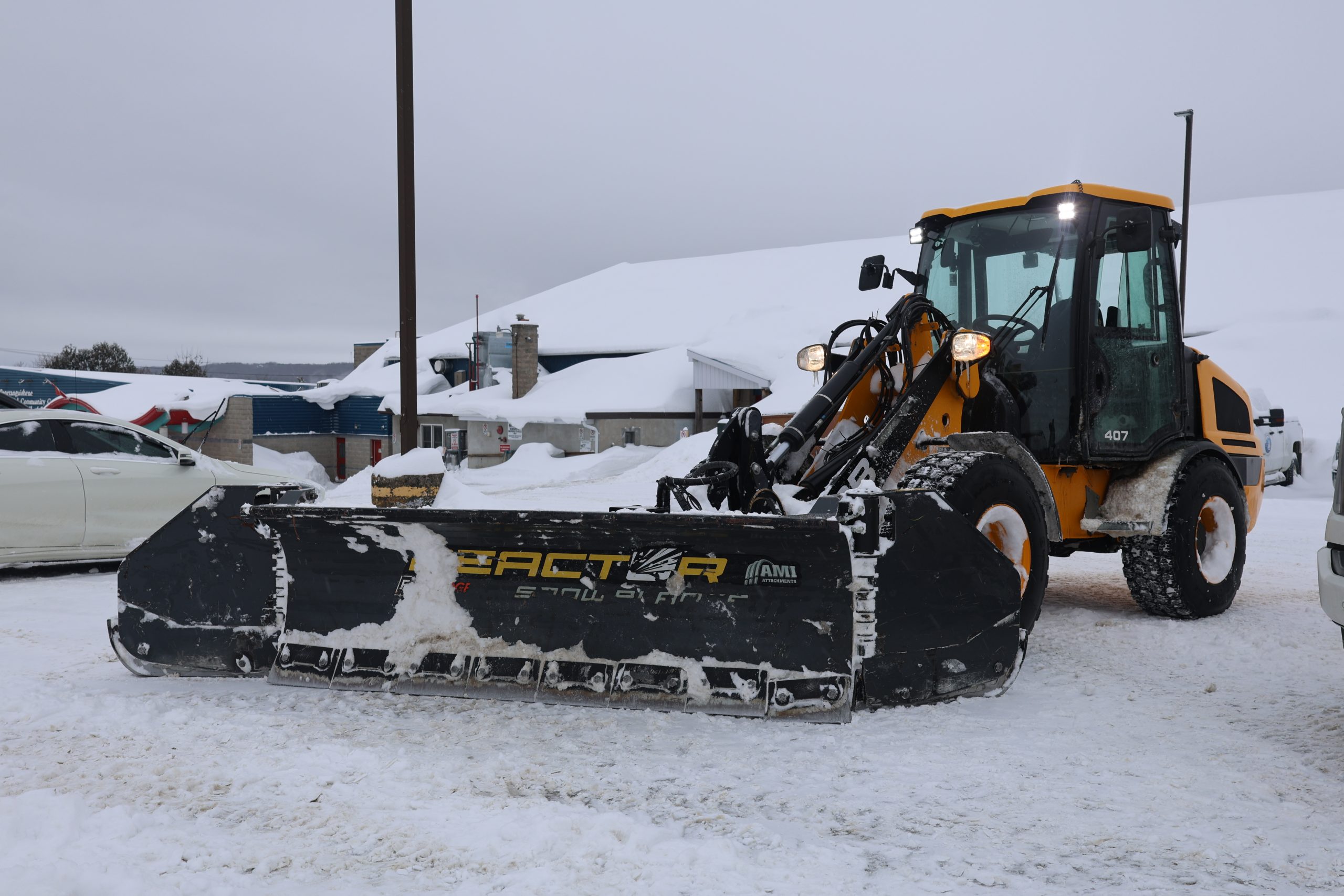
Heavy-duty plow trucks clear parking spaces and driving lanes quickly. Wheel loaders and skid steers can also move large amounts of snow.
In addition, our operators work around important site features. They avoid blocking fire hydrants, accessible parking spaces, entrances, and driver sightlines.
Pedestrian and Walkway Clearing
Walkways, entrances, and accessibility ramps can become slippery very quickly. Dedicated crews shovel, blow, and de-ice these areas. Whenever possible, they complete priority routes before the business opens.
Snow Stacking and Off-Site Hauling
Snowbanks can take over parking spaces and block loading areas during long storms. Large piles can also reduce visibility near exits.
When space becomes limited, loaders move snow to approved areas on the property. If necessary, crews can haul snow to an authorized disposal location.
Commercial Rooftop Snow and Ice Management
Flat and low-slope commercial roofs can hold heavy snow loads. Wind can also create uneven drifts and place extra stress on certain roof areas.
Our trained technicians remove heavy buildup and clear blocked roof drains. This work can help reduce leaks, ice dams, and structural concerns.
Equipment for Collingwood Commercial Snow Removal Sites
The wrong equipment can damage asphalt, curbs, interlock, and landscaped areas. It can also slow down clearing. Therefore, we match equipment to each property and surface.
- Inverted tractor-mounted snow blowers work well in condominium lanes and narrow driving areas. They move snow without pushing heavy banks against curbs.
- Articulated loaders with pusher boxes handle large retail and industrial parking lots. Box plows move high volumes of snow while limiting spillover into cleared lanes.
- Urethane and rubber plow edges protect decorative concrete, interlock, and newer asphalt. These edges follow the surface and remove wet snow with less risk of scratching.
Slip-and-Fall Risk and Ontario Property Responsibilities
Snow and ice can create serious liability concerns for commercial property owners. Ontario’s Occupiers’ Liability Act generally requires property occupiers to take reasonable care to keep visitors safe.
If an incident occurs, accurate service records can help show how the property was maintained. For that reason, our commercial service includes detailed digital documentation.
Live GPS Tracking
GPS technology tracks every service vehicle in our fleet. The system records when a vehicle arrives, where it operates, and when it leaves.
Time-Stamped Service Logs
After each visit, technicians record site and weather conditions. Logs may include surface temperatures, snowfall depth, and the amount of de-icer applied.
We store these records for future reference. Therefore, property managers have a clear service history if a claim or maintenance question arises.
Pre-Storm Anti-Icing
Liquid brine can be applied before certain freezing events. It helps prevent snow and ice from bonding to cold pavement.
As a result, plows can clear the surface more effectively. Pre-treatment may also reduce the amount of de-icer needed after the storm.
Commercial Snow Plans for Different Property Types
A single service plan will not work for every business. Instead, the schedule and equipment should match the property’s daily operations.
Retail Plazas and Shopping Centres
Retail properties need open driving lanes, accessible parking, and clear storefront walkways. Crews should complete priority work before stores open. Ongoing ice control may also be necessary during business hours.
Industrial Facilities and Logistics Hubs
Industrial sites depend on steady truck and employee access. Therefore, loading docks, trailer yards, entrances, and shift-change parking areas need priority service. Many of these sites require continuous access during storms.
Condominium and Multi-Residential Properties
Condominium boards need reliable communication and well-planned service times. Crews must clear resident lanes, visitor parking, and pedestrian routes. They must also consider local noise rules during early-morning service.
Medical and Professional Clinics
Clinics need clear entrances, accessibility routes, and parking spaces before patients arrive. Because visitors may have mobility concerns, these properties often require a low-tolerance ice plan.
Hotels, Resorts, and Chalet Associations
Hospitality properties welcome guests throughout the day. Clear parking spaces, entrances, and amenity paths support a safer arrival. They also help guests move bulky luggage and ski equipment more easily.
Collingwood Bylaws and Environmental Considerations
Commercial operators must consider local rules when planning snow storage and ice control.
- Keep snow on private property unless it is hauled away. Do not push or blow it onto municipal roads, public sidewalks, or neighbouring properties.
- Use salt carefully. Calibrated spreaders and anti-icing liquids can reduce unnecessary chloride runoff while maintaining safe surfaces.
- Keep fire hydrants, water valves, and electrical equipment accessible. Site plans should identify the required clearance around each feature.
Pre-Season Site Audits and Preparation
Strong winter service begins before the first storm. During September and October, our team completes a site audit for each commercial client.
Property Staking
Crews place visible snow stakes near curbs, catch basins, fire hydrants, landscape beds, and electrical obstacles. These markers help operators work safely during dark or heavy storms.
Drainage Inspection
Leaves and debris can block catch basins before winter begins. Clearing these areas helps melting snow drain during warmer periods.
Pavement and Curb Mapping
Photos document existing pavement damage, cracked curbs, and broken interlock. This record gives property managers a clear starting point before winter service begins.
Commercial Snow Removal Contracts and Pricing
Our commercial contract options reflect different budgets, properties, and risk levels.
Seasonal Fixed-Rate Plans
A fixed-rate plan provides one predictable seasonal price. Coverage can include parking lot plowing, walkway clearing, and ice control. This option supports steady annual budgeting, even during a snowy winter.
Per-Push or Per-Event Plans
These plans charge for each storm or service visit. Pricing may also depend on snowfall depth. This option connects costs directly to the amount of winter service provided.
Time-and-Materials Loader Plans
Large industrial sites may need loader work or custom snow hauling. A time-and-materials plan charges for the equipment, labour, and hauling required for the job.
Frequently Asked Questions About Collingwood Commercial Snow Removal
What is the standard snowfall trigger for commercial properties?
Most commercial contracts use a 2.5-centimetre snowfall trigger. However, medical clinics and busy retail properties may request service as soon as accumulation begins.
How do you respond to freezing rain or black ice?
Our weather monitoring system tracks conditions across Simcoe County. When freezing rain or black ice develops, salt trucks can apply de-icing products to priority areas.
Can you remove snow when our parking lot runs out of space?
Yes. Our team uses loaders, dump trucks, and skid steers for snow stacking and off-site hauling. We can move snow when existing piles begin to block parking, loading areas, or sightlines.
Are your commercial operations insured?
Yes. We carry commercial general liability insurance for our commercial winter maintenance work. Property managers can request current coverage details when reviewing a contract.
Request a Collingwood Commercial Snow Removal Site Audit
Georgian Bay snow squalls can block delivery areas, limit customer access, and increase winter hazards. A pre-season audit allows our team to review your property before snow arrives.
Contact us today to discuss your needs and secure a customized Collingwood commercial snow removal contract.
We also provide residential snow clearing in Collingwood.
Businesses outside Collingwood can explore our commercial snow removal services in Barrie.