Zero-Tolerance Commercial Snow Management: What Does It Actually Mean?
Posted on 8 October 2026
Commercial snow management can range from basic plowing after a storm to a much more active winter service plan. For properties with heavy traffic or higher service expectations, a zero-tolerance approach may involve earlier response, repeated monitoring and more attention to changing surface conditions.
However, “zero tolerance” does not mean a property will remain completely free of every snowflake during an active storm. Instead, it describes a more proactive approach to snow and ice management. For Collingwood property managers, understanding that difference can make winter contracts much easier to compare.
What Does Zero-Tolerance Commercial Snow Management Mean?
Zero-tolerance commercial snow management generally aims to limit how much snow and ice can build up before crews respond. Instead of waiting for significant accumulation, the service plan may use lower triggers and more frequent attention.
Therefore, crews may visit a property several times during one weather event. They may maintain priority routes while snow continues to fall, then return for detailed clearing once conditions improve.
The exact service still depends on the contract. As a result, property managers should ask what “zero tolerance” means to the contractor rather than assuming every company uses the term the same way.
Commercial Snow Management Starts With the Property
A proactive winter plan needs to reflect how the site actually operates. A medical building, retail plaza and industrial property may all require very different priorities.
For example, a retail property may need customer entrances and accessible parking available throughout operating hours. Meanwhile, an industrial site may place more emphasis on loading docks, employee access and truck routes.
Therefore, contractors should review the property before winter and identify those areas in advance. A clear site plan helps crews respond quickly when snowfall begins.
Why Some Properties Need More Proactive Snow Management
Not every commercial property needs the same service level. A lightly used office lot may have more flexibility than a busy medical clinic or 24-hour operation.
However, properties with constant vehicle or pedestrian traffic can experience packed snow much faster. Snow may become compressed before a standard plowing trigger is reached, especially around entrances and intersections.
As a result, those sites may benefit from earlier attention. The goal is to manage conditions before they become harder to address.
Zero-Tolerance Commercial Snow Management Uses Lower Service Triggers
One major difference often comes down to service triggers. A standard contract might begin plowing after an agreed amount of accumulation, while a more proactive plan may respond sooner.
However, the trigger should always appear clearly in the contract. Property managers need to know when crews will respond and what conditions activate different services.
In addition, snow and ice may require different triggers. A property can develop slippery conditions even when there is not enough accumulation to require a plow.
Commercial Snow Management During Long Storms
Long storms are where a proactive plan becomes especially noticeable. Waiting until the snow stops may not work for a property that needs continuous access.
Instead, crews may make several passes throughout the event. For example, they might maintain main drive lanes and entrances first, then return for a more complete cleanup later.
Meanwhile, smaller crews or equipment may continue working around pedestrian areas. Therefore, the property remains manageable throughout the storm rather than receiving one large cleanup at the end.
Zero Tolerance Does Not Mean One Crew Stays on Site Forever
The phrase can create unrealistic expectations if nobody defines it properly. Zero-tolerance service does not necessarily mean equipment remains at one property for the entire storm.
Instead, contractors usually build routes and service cycles around several properties. Crews return according to the contract, storm conditions and site priorities.
Therefore, communication matters. Property managers should understand how frequently the site may receive attention and what happens when conditions change quickly.
Ice Management Is Part of Commercial Snow Management
Snow removal alone cannot address every winter surface condition. Even after plowing, packed snow or meltwater may create slippery sections.
Therefore, proactive commercial snow management often includes an ice-control strategy. Crews may monitor entrances, walkways, ramps, intersections and other high-use areas as temperatures change.
In addition, conditions can change after the snowfall ends. Daytime melting followed by an overnight temperature drop can create new ice long after the main plowing work is complete.
Pedestrian Areas Need Their Own Winter Plan
Parking lots receive a lot of attention because they cover large areas. However, employees, customers and visitors also need safe access between their vehicles and the building.
Therefore, a complete plan should address sidewalks, entrances, ramps and accessible routes. Crews may use smaller equipment, snow blowers or hand tools in these areas.
Meanwhile, snow placement matters too. Clearing a parking lot should not create a pile that blocks a walkway or forces pedestrians into vehicle traffic.
Commercial Snow Management Should Prioritize Critical Areas
During a major storm, not every square metre of pavement carries the same importance. Some areas need attention first so the property can continue operating.
Critical areas may include:
- Main vehicle entrances
- Fire routes
- Accessible parking and routes
- Customer entrances
- Employee walkways
- Loading docks
- Delivery routes
- Emergency access points
- Sloped or historically slippery areas
By identifying these zones before winter, crews can focus their first passes where they matter most. Then, they can complete lower-priority areas as the storm response progresses.
Snow Storage Matters Even With Zero-Tolerance Service
Frequent plowing does not make the snow disappear. In fact, more regular clearing means crews must have a clear plan for where each pass will place the snow.
Early in winter, storage may seem easy because plenty of space remains around the property. However, repeated storms can quickly build large banks that consume parking or block visibility.
Therefore, commercial snow management should include designated storage areas from the beginning. Later in the season, loaders may need to stack or relocate snow to preserve usable space.
Growing Snowbanks Can Change the Entire Plan
A property can look completely different in February than it did in December. Large snowbanks may reduce turning space, narrow entrances or interfere with visibility.
As a result, equipment that worked easily at the beginning of winter may have less room to operate later. Contractors should monitor those changes rather than following the exact same pushing pattern all season.
In addition, snow relocation may become necessary before storage areas completely fail. Addressing the problem earlier can prevent a large mid-winter cleanup.
Commercial Snow Management Requires the Right Equipment Mix
A proactive service plan usually involves more than one type of equipment. Plow trucks provide speed across open pavement, while loaders can move heavier snow and manage large piles.
Meanwhile, compact machines work well around tight parking areas and loading zones. Snow blowers and hand tools can address pedestrian spaces that larger equipment cannot reach.
Therefore, the best equipment plan follows the property. Using the biggest machine everywhere does not automatically create better service.
Frequent Service Can Help Prevent Packed Snow
Vehicle traffic changes snow quickly. Fresh accumulation may be relatively easy to move, but repeated traffic can compress it against the pavement.
Once that happens, clearing may become more difficult. Therefore, earlier service can help reduce the amount of snow that becomes heavily packed.
This matters most around intersections, entrances and high-traffic lanes. In addition, repeated attention during long storms can make final cleanup more manageable.
Commercial Snow Management Should Account for Business Hours
A property manager should tell the contractor when the site becomes busiest. Otherwise, crews may technically clear the property but miss the most important operating window.
For example, an office property may need its main lot ready before employees arrive. Meanwhile, a restaurant or retail site may have completely different peak hours.
Therefore, business schedules should form part of the pre-season plan. The contractor can then build service priorities around how people actually use the property.
Documentation Matters With Proactive Snow Management
More frequent service can create more moving parts. Therefore, documentation becomes especially valuable.
Service records may include arrival times, areas serviced, weather conditions and ice-control work. Crews may also document unusual conditions or additional requests.
As a result, property managers gain a clearer history of what happened throughout each event. That information can also help both sides improve the winter plan over time.
Communication Becomes More Important During Major Storms
Even a well-designed winter plan can face unusual conditions. Snowfall may become heavier than forecast, municipal plows may create unexpected windrows or a business may suddenly need access to another area.
Therefore, the contractor and property manager should know how to communicate during the storm. Both sides should also know who can authorize additional work.
A clear communication process prevents several people from giving crews conflicting instructions. In addition, it allows the contractor to respond faster when property priorities change.
Zero-Tolerance Commercial Snow Management Still Needs Realistic Expectations
A proactive contract can provide a higher level of attention, but winter weather still moves faster than equipment sometimes can. During intense snowfall, cleared pavement may begin collecting snow again immediately.
Therefore, property managers should focus on the service process rather than expecting permanent bare pavement during every active storm. The important questions involve response, frequency, priorities and follow-up.
A contractor should explain how the property will be maintained while snow falls and how the final cleanup happens afterward.
Commercial Snow Management After the Storm Ends
The end of snowfall does not always mean the end of service. Crews may need to return for cleanup, widen lanes, reopen parking spaces or address areas that vehicles blocked earlier.
In addition, contractors may need to reassess ice as temperatures change. Meltwater from snowbanks can create new problems even after the parking lot looks clear.
Therefore, post-storm follow-up can be an important part of a proactive plan. Winter management continues until the property reaches the agreed service condition.
Snow Relocation May Become Part of the Plan
Repeated storms can eventually overwhelm normal storage locations. When that happens, loaders may need to move existing piles farther back or transfer snow to another area of the property.
This work differs from ordinary plowing because crews are managing snow that has already accumulated over several events. Therefore, property managers should understand whether relocation falls within the regular agreement.
If the property has extremely limited storage, snow hauling may eventually become necessary. Planning for that possibility before winter makes budgeting much easier.
Is Zero-Tolerance Commercial Snow Management Right for Every Property?
Not necessarily. A property with light traffic and flexible operating hours may not need the same service frequency as a busy public-facing facility.
However, properties with high traffic, limited downtime or more demanding access requirements may benefit from a more proactive approach.
Therefore, property managers should choose service levels based on actual operations. Paying for an aggressive service plan that the property does not need makes little sense, just as choosing an overly basic plan for a demanding site can create problems.

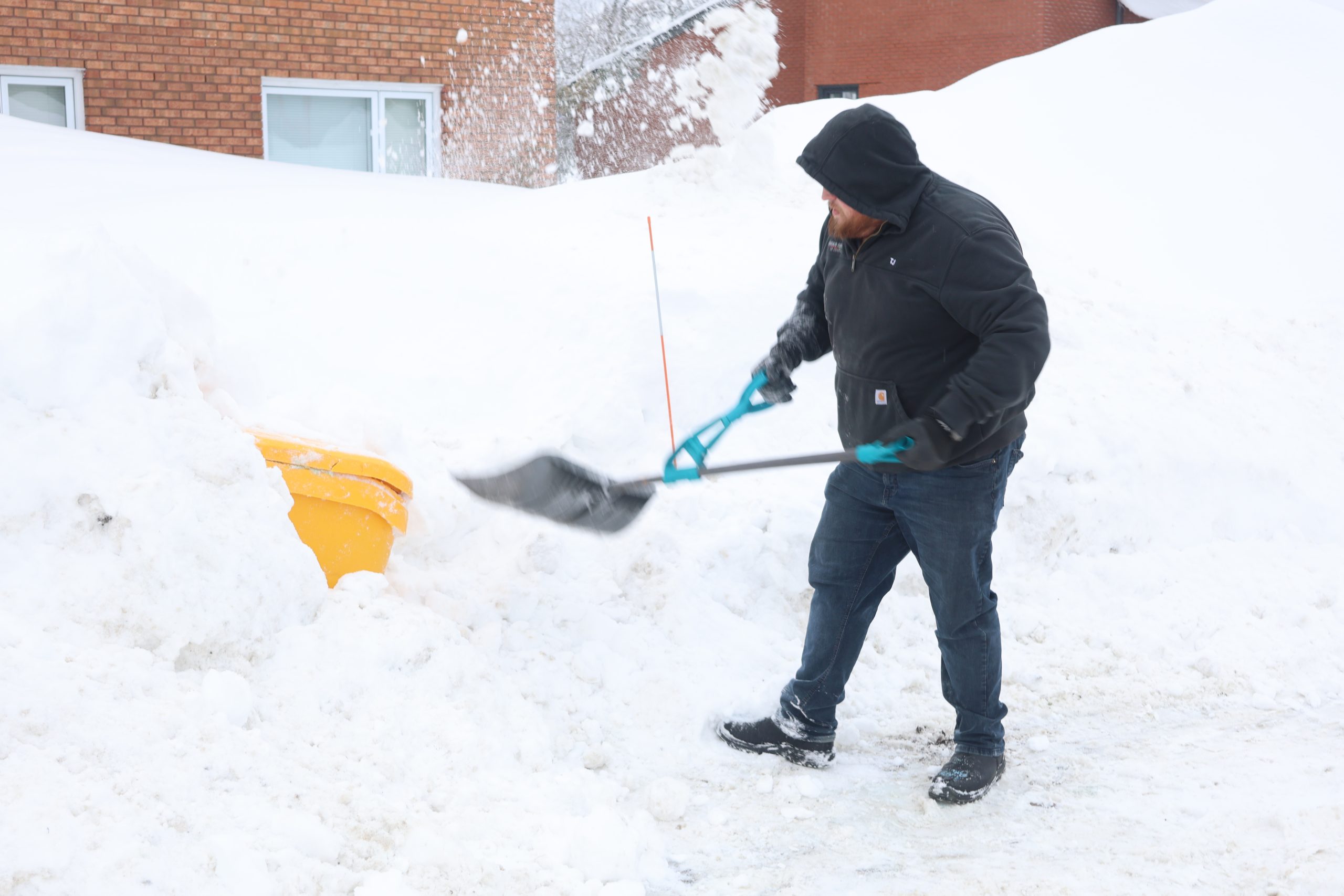
Commercial snow clearing around a property feature in Collingwood, Ontario
Questions to Ask About Zero-Tolerance Snow Service
Before signing a contract, ask the contractor what the term actually means in their service plan. Find out what triggers plowing, when crews return during long storms and how they handle ice.
In addition, ask how pedestrian areas, snow storage and post-storm cleanup fit into the agreement. If loaders, relocation or snow hauling cost extra, those details should be clear before winter.
Most importantly, make sure the contractor understands the property’s operating hours and priority areas. A proactive plan only works when it reflects the site.
Commercial Snow Management in Collingwood
Commercial snow management is more than waiting for a storm to end and sending a plow through the parking lot. A proactive approach can include earlier service, repeated storm visits, pedestrian clearing, ice management, snow storage and post-storm follow-up.
For Collingwood property managers, the right service level depends on how the property operates. Therefore, the goal should be a clear winter plan rather than simply choosing the contract with the most aggressive wording.
Learn more about commercial snow removal in Collingwood and our broader commercial snow removal services.
In addition, follow Ainger Group on LinkedIn for winter property-management tips and seasonal updates.
Planning your commercial winter service? Request a commercial snow removal quote.