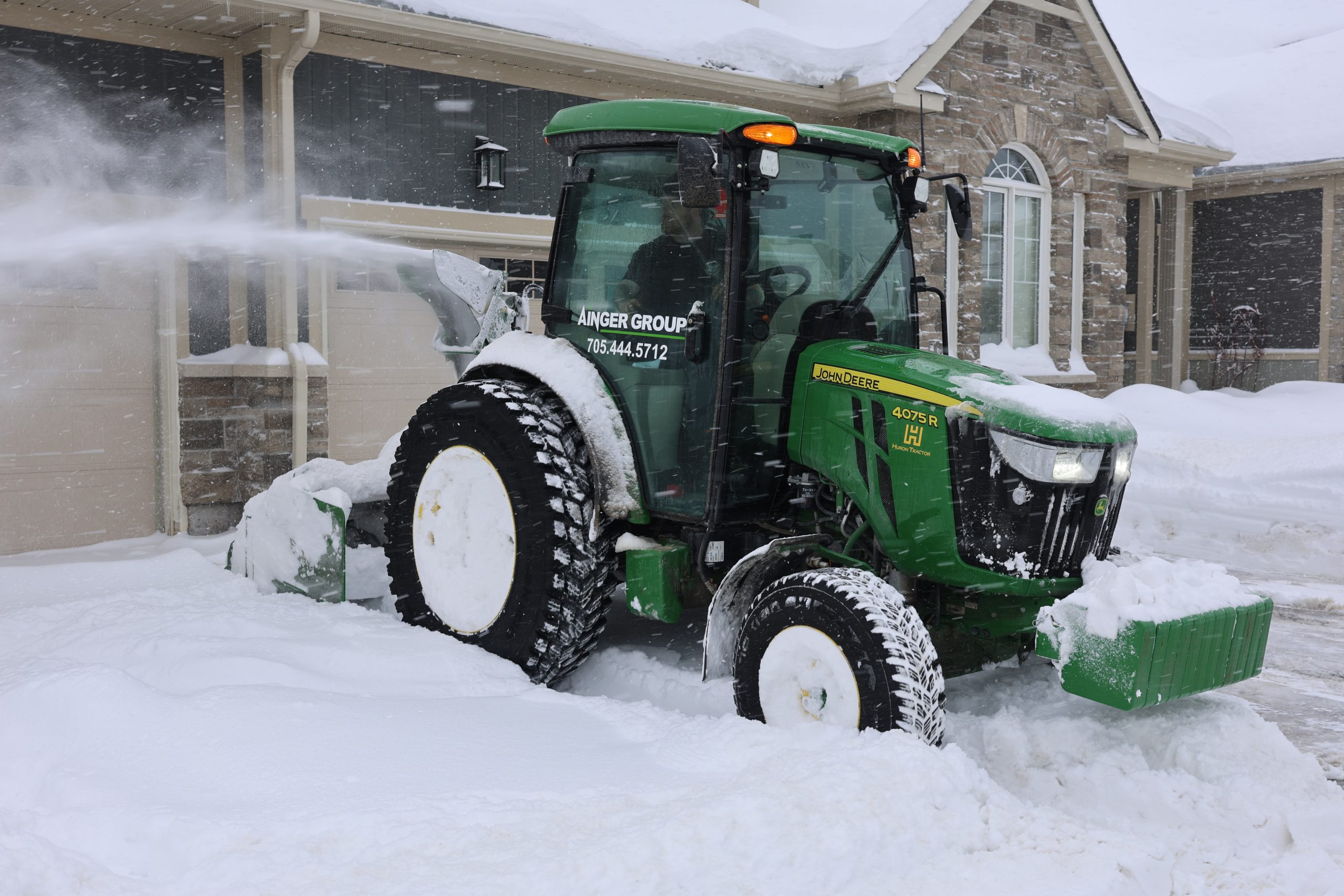
Commercial Snow Clearing vs Snow Plowing: What Is the Difference?
Posted on 29 September 2026
nowCommercial snow clearing and snow plowing often sound like the same service. However, plowing usually describes one specific part of a much larger winter property plan. Commercial snow clearing can include parking lots, sidewalks, entrances, ice control, snow storage and ongoing service during long storms.
For Collingwood property managers, that difference matters when comparing contracts. A quote for plowing alone may not cover every area your property needs. Therefore, understanding the full scope can help you compare winter services more accurately.
What Is Commercial Snow Clearing?
Commercial snow clearing is a broad term for managing snow across a commercial property. It can include plowing, blowing, shovelling, stacking, relocating and sometimes hauling snow.
In addition, a complete plan may cover pedestrian areas and ice management. The exact service depends on the property, operating hours and contract.
For example, a retail plaza may need parking lanes, storefront entrances and accessible routes maintained. Meanwhile, an industrial site may prioritize loading docks, truck routes and employee access.
Therefore, commercial snow clearing should reflect how the property actually operates.
What Is Commercial Snow Plowing?
Commercial snow plowing focuses primarily on moving snow from paved vehicle areas with a plow. Trucks commonly clear parking lots, drive lanes, entrances and access roads.
Plowing works especially well on open pavement because trucks can cover large areas quickly. As a result, it remains one of the most important parts of commercial winter maintenance.
However, a plow truck cannot handle every part of a property. Sidewalks, steps, tight corners and growing snowbanks often need different equipment.
That is why snow plowing usually forms one part of a broader commercial snow clearing plan.
Commercial Snow Clearing Includes More Than the Parking Lot
A parking lot may cover most of a commercial property, but customers and employees use much more than parking spaces.
They also use walkways, entrances, ramps and loading areas. Therefore, commercial snow clearing needs to account for pedestrian routes as well as vehicle access.
Depending on the site, crews may use compact equipment, snow blowers or hand tools around these areas. Meanwhile, plow trucks can continue clearing larger paved sections.
This combination allows crews to match the equipment to each part of the property.
Snow Plowing Works Best on Open Vehicle Areas
Plow trucks shine when operators have enough room to move. They can clear long drive lanes, open parking rows and entrance roads efficiently.
During longer storms, trucks can also make repeated passes through priority areas. Therefore, businesses can maintain access while snow continues to fall.
However, trucks need room to turn and push snow. Parking islands, loading areas and parked vehicles can limit that space.
As a result, contractors may add compact equipment to finish tighter sections.
Commercial Snow Clearing Covers Sidewalks and Entrances
Sidewalk clearing is one of the clearest differences between simple plowing and broader snow clearing. A plow truck cannot maintain most pedestrian routes safely or effectively.
Instead, crews may use snow blowers, smaller machines and hand tools. These methods help maintain entrances, accessible routes, walkways and other narrow areas.
In addition, crews may need to return to entrances after municipal or property snow movement creates new buildup.
Therefore, property managers should confirm whether sidewalk and entrance clearing appears in the contract.
Ice Control Can Be Part of Commercial Snow Clearing
Removing snow does not always leave a surface free of winter hazards. Meltwater can refreeze, while packed snow can create slick areas.
Therefore, many commercial snow clearing plans also include ice management. Contractors may treat parking areas, pedestrian routes or entrances based on site needs and weather conditions.
However, ice control should appear clearly in the service agreement. Property managers should know which areas receive treatment and what triggers an application.
That clarity prevents assumptions once winter begins.
Long Storms
A short overnight snowfall may require one main cleanup. However, a long Georgian Bay snow event can continue for hours.
Commercial properties may still need customer, employee or delivery access during that time. Therefore, contractors often maintain priority areas before the storm ends.
For example, trucks may keep main drive lanes open while smaller crews manage entrances. Then, the contractor can complete a more detailed cleanup after snowfall slows.
This ongoing approach falls under broader snow management rather than one simple plow visit.
Commercial Snow Plowing Does Not Solve Snow Storage
Plowing moves snow, but the snow still needs somewhere to go. At first, contractors may push it toward designated areas around the property.
However, repeated storms gradually fill those spaces. Snowbanks can then consume parking stalls, reduce visibility and narrow entrances.
Therefore, commercial snow clearing should also address snow storage. Loaders can stack snow higher or move it to another approved area.
Eventually, some properties may need off-site snow hauling. Planning for that possibility early can prevent a mid-winter space crunch.
Equipment Changes
Different tasks require different equipment. Plow trucks provide speed across open pavement, while loaders handle heavier snow and larger piles.
Meanwhile, compact machines can work around tighter spaces. Snow blowers may also help where crews need to throw snow away from a narrow clearing path.
Therefore, a strong contractor does not rely on one machine for every area.
The equipment plan should follow the property layout, snowfall and snow-storage strategy.
Commercial Snow Clearing Can Include Snow Blowing
Snow blowing offers another way to move snow when pushing space remains limited. Instead of building a pile directly beside the route, a blower throws snow toward an approved area.
This approach can work well on certain walkways, drive lanes and tighter spaces. However, crews still need a safe discharge area.
Operators should never send snow toward pedestrians, vehicles or neighbouring properties. Therefore, the property layout still determines whether blowing makes sense.
Snow blowers add another tool to the overall commercial snow clearing plan.
Snow Relocation Is Different From Snow Plowing
Commercial snow plowing in Collingwood, Ontario
Sometimes a property has enough room for snow at the beginning of winter but loses that space over time. In that situation, crews may need to relocate existing piles.
A loader can move snow from crowded areas to larger storage zones. As a result, the property can regain parking spaces and improve sightlines.
This work goes beyond regular plowing. Instead, it becomes part of longer-term snow management.
Property managers should ask how their contractor handles snowbanks once normal storage areas begin to fill.
Snow Hauling May Become Part of Commercial Snow Clearing
Some commercial properties simply do not have enough snow-storage space for an entire winter. Downtown sites and tightly developed properties can face this problem quickly.
In these cases, crews may load snow into trucks and move it off site. However, snow hauling usually requires additional equipment, labour and planning.
Therefore, contracts may price it separately from standard snow clearing.
Property managers should understand that process before the lot runs out of space.
Protect Priority Areas
Every property has areas that matter more during a storm. For example, a medical building may prioritize accessible entrances and emergency access.
Meanwhile, a retail property may focus on customer entrances and main parking lanes. An industrial facility may need loading routes open before early deliveries.
Therefore, commercial snow clearing should start with clear priorities.
Contractors can then determine which areas need immediate service and which can wait for final cleanup.
Commercial Snow Plowing May Require Multiple Passes
People sometimes imagine plowing as one truck arriving after the snowfall ends. However, long storms often require a different approach.
A contractor may plow main routes several times to prevent excessive buildup. Then, crews can return for final cleanup after conditions improve.
This process helps businesses continue operating during prolonged snowfall. In addition, it can prevent deep accumulation from making later clearing more difficult.
Therefore, multiple plow passes do not necessarily mean crews missed something earlier. They may form part of the storm plan.
Commercial Snow Clearing Should Include Communication
Weather can change quickly during a Collingwood winter. As a result, property managers and contractors need a clear communication process.
Both sides should know who handles service questions and who can approve additional work. In addition, contractors should know about changes in operating hours or special site needs.
For example, a delivery schedule may change during a major storm. Quick communication can help crews adjust priorities.
A good snow plan includes communication before anyone needs it.
Documentation Supports Commercial Snow Clearing
Commercial property managers may also want service records throughout the winter. These records can help confirm when crews visited and what work they completed.
Depending on the service plan, documentation may include arrival times, areas serviced and ice-control applications. In addition, crews may note unusual site conditions.
This information creates a clearer picture of winter operations. Therefore, property managers should ask what documentation their contractor provides.
Commercial Snow Clearing vs Snow Plowing: Which Do You Need?
Most commercial properties need more than basic parking-lot plowing. However, the exact scope depends on the site.
A simple property with a large open lot may rely heavily on plow trucks. Meanwhile, a property with sidewalks, loading areas and limited storage may need a broader equipment mix.
Therefore, property managers should compare the entire service plan rather than focusing only on the word “plowing.”
Ask which areas the contractor clears, how crews manage ice and where snow will go throughout winter.
Questions to Ask About Commercial Snow Clearing
Before signing a winter contract, confirm what the service actually includes. Ask whether the contractor covers parking lots, entrances, sidewalks and accessible routes.
Also, ask how crews handle long storms, growing snowbanks and ice. If snow relocation or hauling costs extra, understand those charges before winter.
Finally, discuss equipment and communication. A clear plan should explain how the contractor will keep the property functioning as conditions change.
Commercial Snow Clearing in Collingwood
Commercial snow plowing is important, but it only describes part of winter property management. S clearing takes a wider view of the property and can include vehicle areas, pedestrian routes, ice control and snow storage.
Therefore, Collingwood property managers should compare service scope before choosing a contractor.
Learn more about commercial snow removal in Collingwood and our broader commercial snow removal services.
In addition, follow Ainger Group on LinkedIn for winter property-management tips and snow-removal updates.
Planning winter service for your property? Request a commercial snow removal quote.