Bobcat Snow Removal: When Compact Equipment Works Best
Posted on 27 September 2026
Bobcat snow removal is a common search term for clearing snow with compact skid steers and similar machines. These smaller machines can work where a full-size plow truck or large loader may have limited room to manoeuvre. Therefore, they can play an important role on commercial properties with tight parking areas, loading zones, islands and narrow access points.
However, compact equipment does not automatically replace larger snow-removal machines. Instead, contractors often use it alongside trucks and loaders. The best choice depends on the property, the snowfall and the job crews need to complete.
What Does Bobcat Snow Removal Mean?
Bobcat is actually an equipment brand, although people often use the name more broadly when talking about skid steers or compact loaders. Therefore, a contractor may use another equipment brand while performing the same type of work.
The important factor is the machine’s size and capability. Compact equipment offers strong pushing power while using much less operating space than a large wheel loader. As a result, crews can use these machines in areas where larger equipment becomes awkward.
For this article, “Bobcat snow removal” refers to this general style of compact-machine snow clearing rather than one specific equipment manufacturer.
Where Bobcat Snow Removal Works Best
Compact equipment shines when a property has enough snow to require machinery but not enough open space for large equipment to work efficiently. For example, a neighbourhood retail centre may have narrow lanes between parking islands, curbs and storefronts.
In addition, office properties may have tight employee parking areas behind the building. Industrial sites can also have narrow spaces around loading areas, dumpsters and utility equipment. Therefore, compact equipment gives operators more control in these confined areas.
The machine can move substantial snow without requiring the turning radius of a larger loader.
Bobcat Snow Removal for Tight Commercial Parking Areas
Parking lots often look wide open before you examine the details. However, parked vehicles, islands, cart corrals, light standards and curbs can quickly reduce usable space.
A full-size plow truck works extremely well on long open lanes. Meanwhile, compact equipment can focus on smaller sections that require more manoeuvring.
For example, crews may use a truck to clear the main parking lanes first. Then, a compact loader can clean around islands or move snow from tighter corners.
As a result, each machine handles the part of the property that suits it best.
Compact Snow Equipment Can Work Around Loading Areas
Loading zones need reliable winter access, but they can also contain many obstacles. Dock walls, trailers, bollards and parked vehicles all reduce working space.
Therefore, compact equipment can make sense in these areas. Operators can work closer to dock approaches while maintaining better control around fixed structures.
In addition, compact machines can move snow away from corners where a larger truck cannot push effectively. Once crews move that snow into a more open area, a larger loader may take over.
This equipment combination can make the entire snow-management process more efficient.
Bobcat Snow Removal Can Help Around Parking Islands
Parking islands create a classic snow-removal puzzle. Trucks need enough room to angle around them, while large loaders may simply feel oversized.
Compact equipment can work closer to these features. Therefore, operators can clean areas that might otherwise collect snow after the main plowing pass.
However, the operator still needs to know where curbs and landscaping sit beneath the snow. As a result, pre-season site preparation remains important.
Snow stakes can help mark hidden edges before deep accumulation covers them.
Why Compact Equipment Works Well Near Buildings
Buildings create another challenge because crews cannot simply push snow in every direction. Entrances, doors, landscaping and mechanical equipment can limit snow placement.
Compact machines give operators more control in these areas. For example, they may move snow away from a building and into a location where larger equipment can stack it.
Meanwhile, pedestrian crews can focus on sidewalks and entrances.
Therefore, compact snow equipment often acts as the bridge between detailed hand clearing and large-scale parking-lot plowing.
Bobcat Snow Removal vs a Full-Size Plow Truck
These machines solve different problems.
A plow truck usually wins on speed across open pavement. It can clear long drive lanes, large parking areas and entrance roads efficiently. In addition, trucks can travel easily between properties.
Compact equipment gives up some of that speed in exchange for manoeuvrability. Therefore, it makes more sense in tighter areas or where crews need greater control.
On many commercial properties, choosing one or the other would create unnecessary limitations. Instead, a contractor can use the truck for open areas and compact equipment for the detail work.
Bobcat Snow Removal vs a Large Loader
Large wheel loaders bring more weight, lifting ability and snow-moving capacity. Therefore, they work extremely well when a property develops large snow piles or needs major snow relocation.
However, their size can become a disadvantage on smaller sites. Tight corners and narrow lanes may slow them down.
Compact loaders solve that problem. They can still push and carry meaningful amounts of snow while fitting into smaller operating spaces.
Nevertheless, large loaders remain valuable for heavy accumulation and major snow-storage work. Again, the property should determine the equipment rather than the other way around.
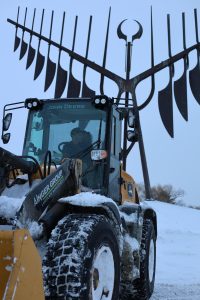
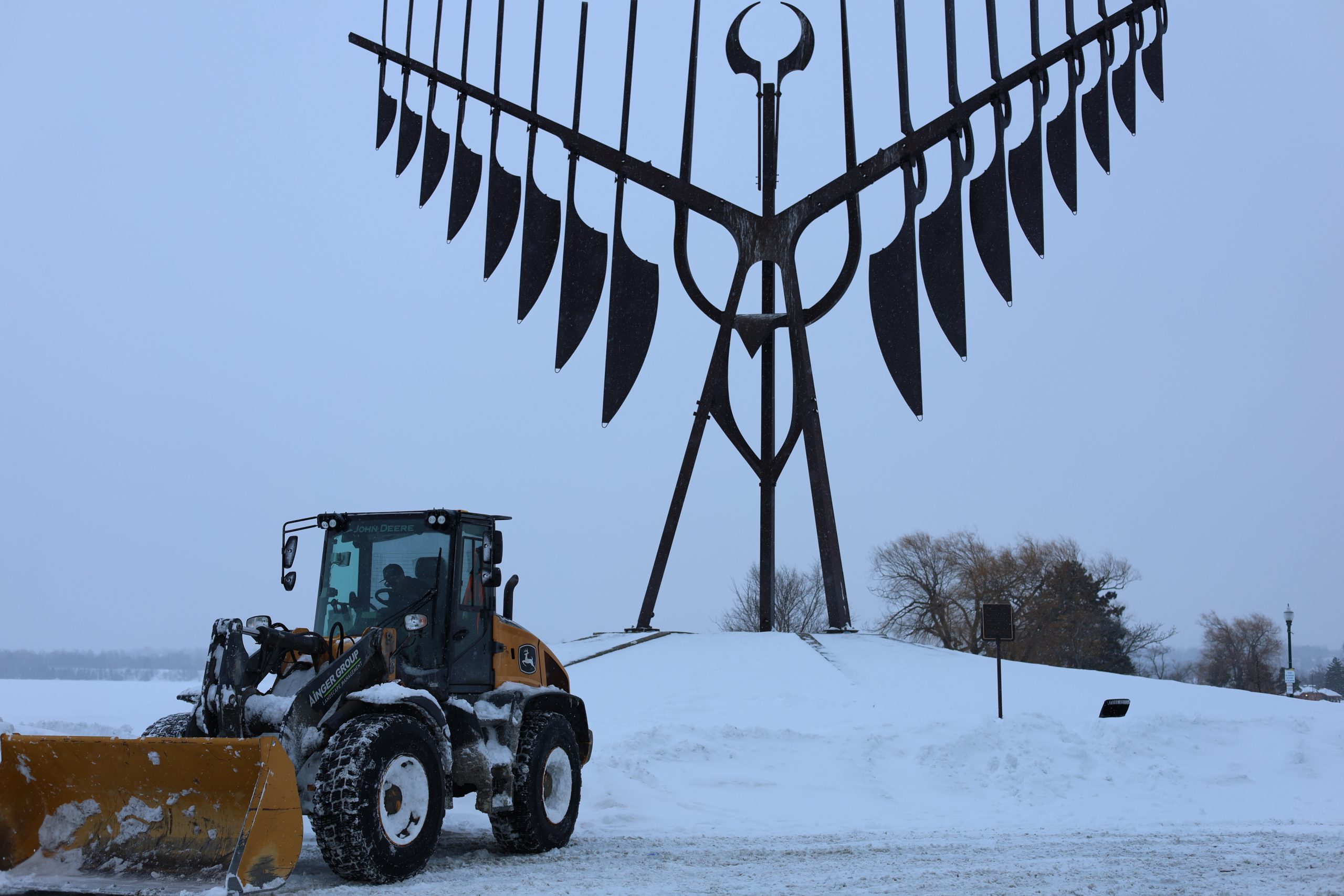
Compact snow removal loader in Barrie, Ontario
Attachments Make Compact Snow Equipment More Versatile
One reason contractors value compact equipment is attachment flexibility. Different attachments can change how the machine handles snow.
For example, a snow pusher can move a large volume across pavement. A bucket can lift and relocate material. Other setups may help crews manage narrower or more detailed areas.
Therefore, the machine can take on different roles throughout the winter.
However, attachment choice still depends on the property. A wide pusher may work beautifully in an open area but poorly inside a narrow lane.
The contractor needs to match both the machine and attachment to the job.
Bobcat Snow Removal Can Help With Snow Stacking
Snow storage rarely creates a serious problem after the first storm. Instead, it becomes a problem after repeated storms fill the original storage areas.
Compact equipment can help manage those growing piles. For example, crews can push snow farther into designated storage areas or lift material with a bucket.
However, a compact machine still has limits. When piles become very large, a full-size loader may manage them more efficiently.
Therefore, contractors should watch snow storage throughout the season rather than waiting until the parking lot runs out of room.
Compact Equipment Helps Reclaim Parking Space
Every snow pile takes up space that a property could use for something else. As winter continues, poorly managed snowbanks may begin consuming parking stalls or narrowing traffic lanes.
Compact equipment can help reclaim some of that space. Because the machine can work in tighter areas, operators may reshape or relocate piles that a truck could not easily reach.
As a result, property managers can preserve more usable space throughout winter.
However, eventually even efficient stacking reaches its limit. At that point, the property may need larger equipment or off-site snow hauling.
Wet Snow Can Change Bobcat Snow Removal Performance
Fresh powder and dense wet snow create very different workloads. Wet snow weighs more, packs together and requires more pushing force.
Compact equipment can handle substantial snow, especially when crews choose an appropriate attachment. However, deeper or denser accumulation may favour heavier equipment.
Therefore, contractors need the flexibility to change their equipment plan during difficult weather.
For example, compact equipment may continue working around tight areas while a larger loader handles the heaviest piles. Meanwhile, trucks can maintain the main drive lanes.
That coordinated approach usually works better than expecting one machine to handle everything.
Long Storms Require More Than One Equipment Strategy
Barrie can experience snow events that continue for many hours. During those storms, commercial properties may need service before the snowfall ends.
Therefore, trucks may make repeated passes through main traffic routes. At the same time, compact equipment can maintain smaller areas that need continued access.
Once the snowfall slows, crews can complete a more detailed cleanup.
In addition, loaders may begin managing snow storage if accumulation becomes significant.
This is why equipment planning matters before the storm. A contractor needs to know which machines will handle each part of the property.
Bobcat Snow Removal Works Well for Certain Commercial Properties
Compact equipment can support many property types. However, some layouts benefit from it more than others.
Good candidates may include:
- Retail plazas with parking islands
- Office buildings with smaller rear lots
- Condominium properties
- Medical and professional buildings
- Commercial properties with narrow drive lanes
- Industrial sites with tight loading areas
- Properties with limited snow-storage access
The common theme is limited working space.
Therefore, compact equipment provides the most value when manoeuvrability matters as much as raw pushing capacity.
Compact Equipment Still Needs a Site Plan
A smaller machine does not eliminate the need for preparation. Operators still need to know where curbs, drains, landscaping and utilities sit beneath the snow.
Therefore, contractors should review the property before winter. They can identify obstacles, mark important edges and determine approved snow-storage locations.
In addition, the contractor should understand which areas need priority service.
For example, a loading area may need early access while another section can wait for the final cleanup. That information helps crews use compact equipment where it creates the most value.
Is Bobcat Snow Removal Better for Every Commercial Site?
No. Compact equipment provides a specific advantage, not a universal one.
Large open parking lots often favour plow trucks because they can cover more ground quickly. Likewise, major snow piles may favour larger loaders.
However, compact machines excel where those larger machines lose efficiency.
Therefore, the best commercial snow operation often uses a combination of equipment. Trucks provide speed, large loaders provide capacity and compact machines provide manoeuvrability.
The strongest plan uses each one intentionally.
What Property Managers Should Ask About Compact Snow Equipment
When reviewing a commercial snow plan, ask how the contractor intends to service tighter parts of the property. Also, ask whether the same machine will handle every area or whether crews use different equipment for different jobs.
In addition, discuss snow storage before winter. Compact equipment can help manage smaller piles, but the property still needs a long-term storage plan.
Finally, ask what happens during unusually heavy storms. A contractor should have enough equipment flexibility to scale the response when conditions change.
Bobcat Snow Removal in Barrie
Bobcat snow removal and other compact-equipment methods can solve problems that larger machines cannot handle as efficiently. They work especially well around tight parking areas, islands, loading zones and other confined commercial spaces.
However, compact equipment works best as part of a broader winter plan. Trucks, loaders and smaller machines each bring different advantages.
Ainger Snow Removal plans equipment around each property rather than using the same setup everywhere. Learn more about commercial snow removal for Barrie businesses and our broader commercial snow removal services.
In addition, follow Ainger Group on LinkedIn for winter property-management tips and snow-removal updates.
Planning winter service for your commercial property? Request a commercial snow removal quote.