Driveway Plowing Rates: What Affects the Price?
Posted on 24 September 2026
Driveway plowing rates can vary considerably from one property to another. While two homes may sit on the same street, their driveways can require very different amounts of time, equipment and snow management.
Therefore, homeowners in Collingwood should look beyond a simple advertised price. Driveway size matters, but snowfall, access, slope, snow storage and service frequency can also affect the overall cost. Understanding those factors makes it much easier to compare residential snow removal options before winter arrives.
Why Driveway Plowing Rates Vary Between Homes
Snow removal companies usually look at the property itself before determining an appropriate rate. For example, a short, flat driveway with plenty of snow storage may take much less time than a long driveway with tight corners.
However, the physical driveway only tells part of the story. A contractor also needs to consider how often the property needs service, where crews can place snow and how easily equipment can enter and exit.
As a result, two homeowners with similarly sized driveways may still receive different pricing.
Driveway Size Affects Driveway Plowing Rates
Driveway size has one of the clearest effects on pricing. Generally, a larger driveway requires more equipment time and more passes to clear properly.
A single-car driveway may require relatively little clearing. Meanwhile, a wide circular driveway, long rural lane or multi-vehicle parking area can involve considerably more work.
In addition, larger driveways create more snow to manage. Therefore, crews need enough room to push or relocate that snow without blocking parking spaces, entrances or visibility.
Driveway Shape Can Change Snow Plowing Rates
Square footage alone does not tell the full story. A simple rectangular driveway usually allows equipment to move efficiently, while tight curves and unusual layouts can require additional manoeuvring.
For example, landscaping, retaining walls, parked vehicles and narrow entrances can reduce the working space available to the operator. Consequently, the same amount of pavement may take longer to clear.
Circular driveways can also require a different approach. However, when the layout provides good access and snow storage, they may still clear efficiently.
Therefore, contractors need to consider both size and shape when determining driveway plowing rates.
Snowfall Depth Can Affect Driveway Plowing Rates
A few centimetres of light snow creates a very different workload from a major Georgian Bay snow event. As accumulation increases, equipment may need additional passes to clear the driveway effectively.
Heavy snowfall can also create larger municipal windrows at the end of the driveway. In addition, drifting may produce deep sections even when the overall snowfall total remains moderate.
Therefore, some pricing structures account for snowfall depth or the number of visits required during a storm. Homeowners should understand how their contractor handles larger weather events before winter begins.
Wet Snow Can Increase the Workload
Not all snow behaves the same way. Light powder moves relatively easily, while wet snow creates much more resistance.
As temperatures change, snow may also become packed beneath vehicle traffic. Consequently, crews may need more time or heavier equipment to move dense accumulation.
Furthermore, wet snow can create larger, heavier piles along the driveway. Those piles may become harder to manage as winter continues.
Weather conditions can therefore influence the amount of work required even when snowfall totals look similar.
Seasonal vs Per-Visit Driveway Plowing Rates
Contract structure can also affect how homeowners pay for snow removal.
A seasonal plan generally provides service throughout the winter under an agreed seasonal arrangement. As a result, homeowners gain more predictable budgeting regardless of how individual storms unfold.
Per-visit pricing works differently. Instead, charges may depend on each service visit or snowfall event.
Neither option automatically works better for every homeowner. Therefore, consider how much predictability you want, how often your driveway typically needs clearing and what the agreement includes.
Service Frequency Can Affect Driveway Snow Removal Pricing
Some homeowners need their driveway available early every morning. Others have more flexibility, especially if they work from home or use the property less frequently.
Therefore, timing expectations can influence the service plan. Properties that need repeated clearing during long storms may require more visits than homes that can wait until snowfall slows.
For example, a long snow squall may continue for many hours. A contractor may make an initial pass to maintain access and return later for cleanup.
As a result, homeowners should ask how their service works during extended storms rather than assuming every snowfall creates one visit.
Snow Storage Plays a Role in Driveway Plowing Rates
Snow removal gets more complicated when there is nowhere left to put the snow.
Early in winter, most properties have plenty of storage space. However, repeated storms can gradually build large banks along the driveway.
Eventually, those banks may narrow the usable driveway, reduce visibility or interfere with parking. Therefore, the original plowing approach may need to change later in the season.
Properties with limited storage may require additional snow movement. In contrast, homes with large open storage areas often provide crews with more flexibility.
Planning snow placement before winter can help avoid problems after several major storms.
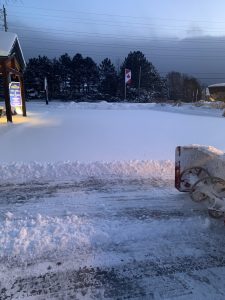
Professionally cleared driveway area in Collingwood, Ontario
Long Driveways Require More Equipment Time
Long rural and estate driveways present their own challenges. Although the layout may remain straightforward, the operator simply has more ground to cover.
Additionally, long driveways may include hills, curves or narrow sections. The crew may also need to maintain turnaround areas near the house.
Therefore, contractors usually assess these properties differently from standard subdivision driveways.
Long driveways can still work very well with professional service. However, their size and travel path naturally affect the amount of work involved.
Does a Steep Driveway Affect Snow Plowing Rates?
Slope can affect both efficiency and equipment access. A steep driveway may require more careful operation, especially when packed snow or ice develops.
Furthermore, certain equipment may perform better than others depending on the grade and available space. A contractor may need to account for those conditions when planning the property.
Ice control may also become more important on sloped surfaces. Therefore, homeowners should mention steep sections when requesting a quote rather than comparing their property directly with a flat driveway nearby.
The Municipal Snowplow Windrow Matters Too
Many homeowners know this winter ritual well. You finish clearing the driveway, then the municipal plow passes and leaves a fresh wall of snow across the entrance.
That windrow can contain dense, compacted snow. As a result, it may require considerably more effort than the lighter snow already sitting on the driveway.
Professional residential snow removal plans may account for these conditions differently. Therefore, homeowners should ask how their contractor handles municipal plow buildup at the road.
That small detail can make a noticeable difference after heavy storms.
Equipment Can Influence Driveway Snow Removal Costs
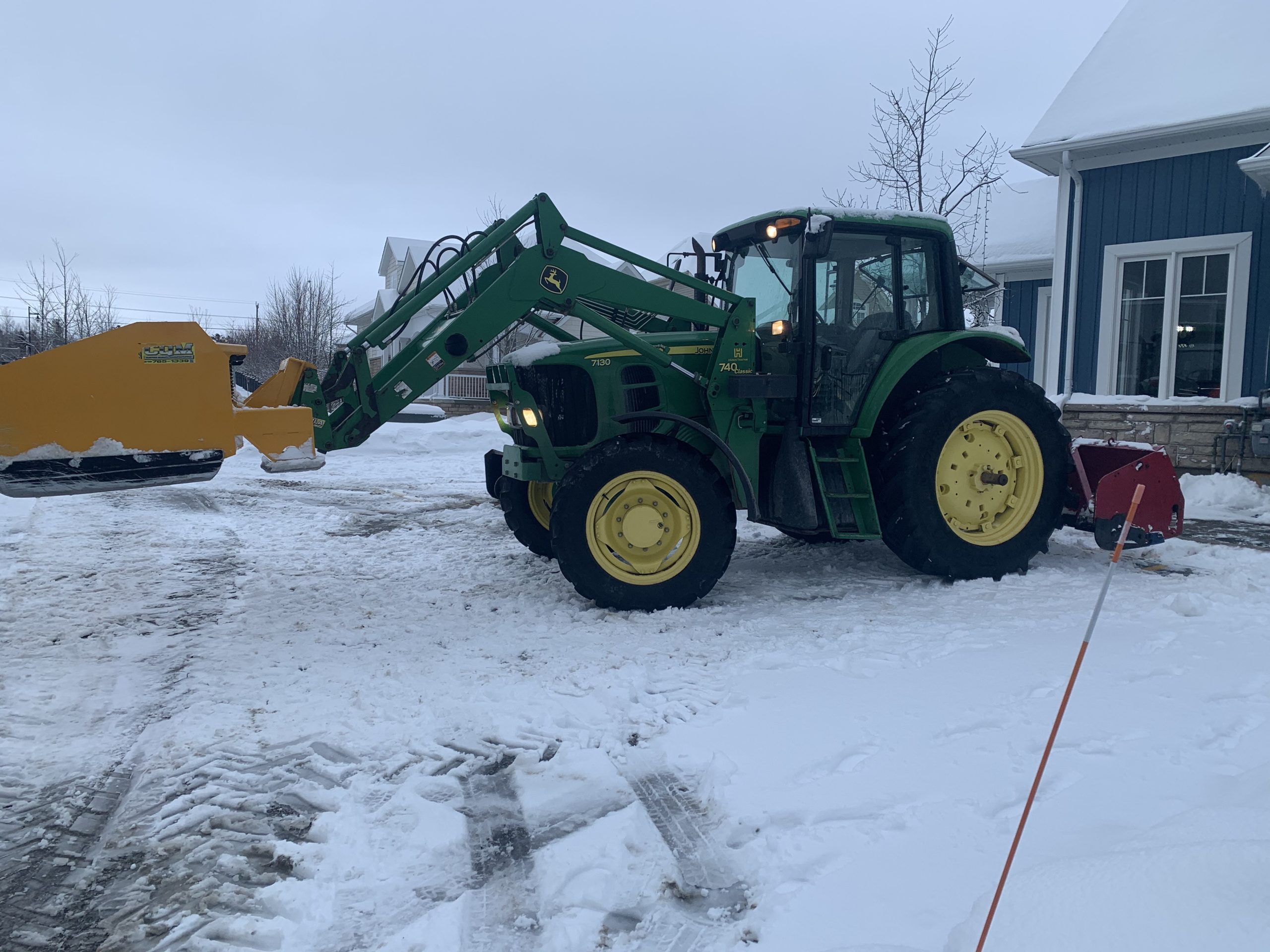
Different properties suit different equipment. For example, tractors or compact machines can work efficiently on some larger residential driveways.
Meanwhile, tighter properties may require smaller equipment or more detailed clearing. The contractor may also need hand-clearing around areas that machines cannot safely reach.
Therefore, the equipment plan should match the property instead of forcing one machine into every situation.
Efficient equipment can reduce clearing time. However, access still determines whether that equipment can actually work on the driveway.
Parked Vehicles Can Change the Service
Cars can make driveway clearing much more difficult. Even when operators can work around a parked vehicle, they may not reach the snow underneath or beside it.
Consequently, homeowners may end up with narrow strips or packed areas after moving the vehicle later.
Whenever possible, follow your contractor’s instructions about vehicle placement before service. This simple step can help crews clear more of the driveway efficiently.
In addition, it reduces the amount of detailed manoeuvring required around parked vehicles.
Extra Areas May Affect the Final Price
When comparing driveway plowing rates, make sure each quote covers the same areas.
One contractor may quote only the driveway. Another service may also include walkways, entrances or other residential clearing.
Therefore, ask exactly what the agreement includes.
For example, homeowners may want:
- Driveway clearing
- Front walkway clearing
- Steps or entrance access
- Additional parking areas
- Municipal windrow clearing
- Other property-specific areas
Comparing the same scope gives you a much clearer picture of value.
Why Extremely Cheap Driveway Plowing Rates Deserve a Closer Look
A low price does not automatically mean poor service. However, homeowners should understand what they receive for that price.
For example, an inexpensive plan may include fewer areas, different service triggers or less frequent visits during long storms. Another contractor may include a broader scope.
Therefore, compare the service rather than looking only at the number.
Ask when crews respond, what areas they clear and how they handle major snowfalls. In addition, confirm how communication works if you have a service concern.
What to Ask Before Comparing Driveway Plowing Rates
Before choosing a snow removal service, homeowners should understand the full arrangement. Ask what areas the contractor clears, when service begins and what happens during prolonged snowfall.
Also, ask about vehicle placement, snow storage and municipal windrows. If additional services cost extra, make sure you understand those charges before winter.
Ultimately, a clear agreement makes it easier to compare quotes accurately.
Driveway Plowing Rates Should Reflect the Property
There is no single driveway plowing rate that makes sense for every home. Instead, pricing should reflect the amount of work required to service the property properly.
A simple driveway may need relatively little equipment time. However, long lanes, steep grades, limited snow storage and complex layouts can require a different plan.
Therefore, a property-specific quote provides much more useful information than a generic advertised price.
Residential Driveway Snow Removal in Collingwood
Collingwood homeowners can face everything from light overnight snowfall to repeated Georgian Bay snow squalls. As a result, driveway snow removal needs can change significantly throughout the season.
Ainger Snow Removal provides residential snow removal services for Collingwood homeowners. You can also explore our Collingwood snow removal guide for homeowners for more winter planning information.
In addition, follow Ainger Group on LinkedIn for seasonal winter tips and snow-removal updates.
Want pricing for your property? Contact Ainger Snow Removal to request residential snow removal information for your Collingwood home.