What Commercial Snow Removal Services Should Include
Posted on 17 September 2026
Commercial snow removal services should cover more than pushing snow to the edge of a parking lot. A complete winter plan should keep vehicle routes open, maintain pedestrian access, manage ice and prevent snow storage from becoming a mid-season problem.
For commercial properties in Collingwood, those details matter because Georgian Bay weather can change quickly. Therefore, property managers should understand exactly what a contractor includes before winter begins.
Commercial Snow Removal Services Should Start With a Site Plan
First, a contractor should learn how the property operates. A retail plaza, industrial building and medical office all use their sites differently. Therefore, crews need to know which areas matter most before snow covers curbs, lines and obstacles. A useful site plan should identify parking areas, fire routes, loading zones, accessible spaces, entrances, sidewalks, hydrants and snow storage areas.
In addition, property managers should explain business hours, delivery schedules and employee arrival times. That information helps crews set priorities during a storm. As a result, the contractor can build a service plan around the property instead of treating every site the same.
Commercial Snow Removal Services Should Cover Parking Lots and Drive Lanes
Parking lot plowing forms a major part of most commercial snow removal services. However, clearing the lot means more than opening a few driving lanes. Crews need to maintain traffic flow, preserve access to parking spaces and keep entrances usable.
For example, a contractor may clear main drive lanes first during an active storm. Then, crews can return for a more detailed cleanup once snowfall slows. Meanwhile, properties that operate around the clock may need repeated passes. Therefore, the contract should explain which areas receive priority and when crews return.
A strong plan should also account for municipal windrows near driveway entrances. Those piles can restrict access even after crews have already serviced the property.
Commercial Snow Removal Services Need Sidewalk and Entrance Clearing
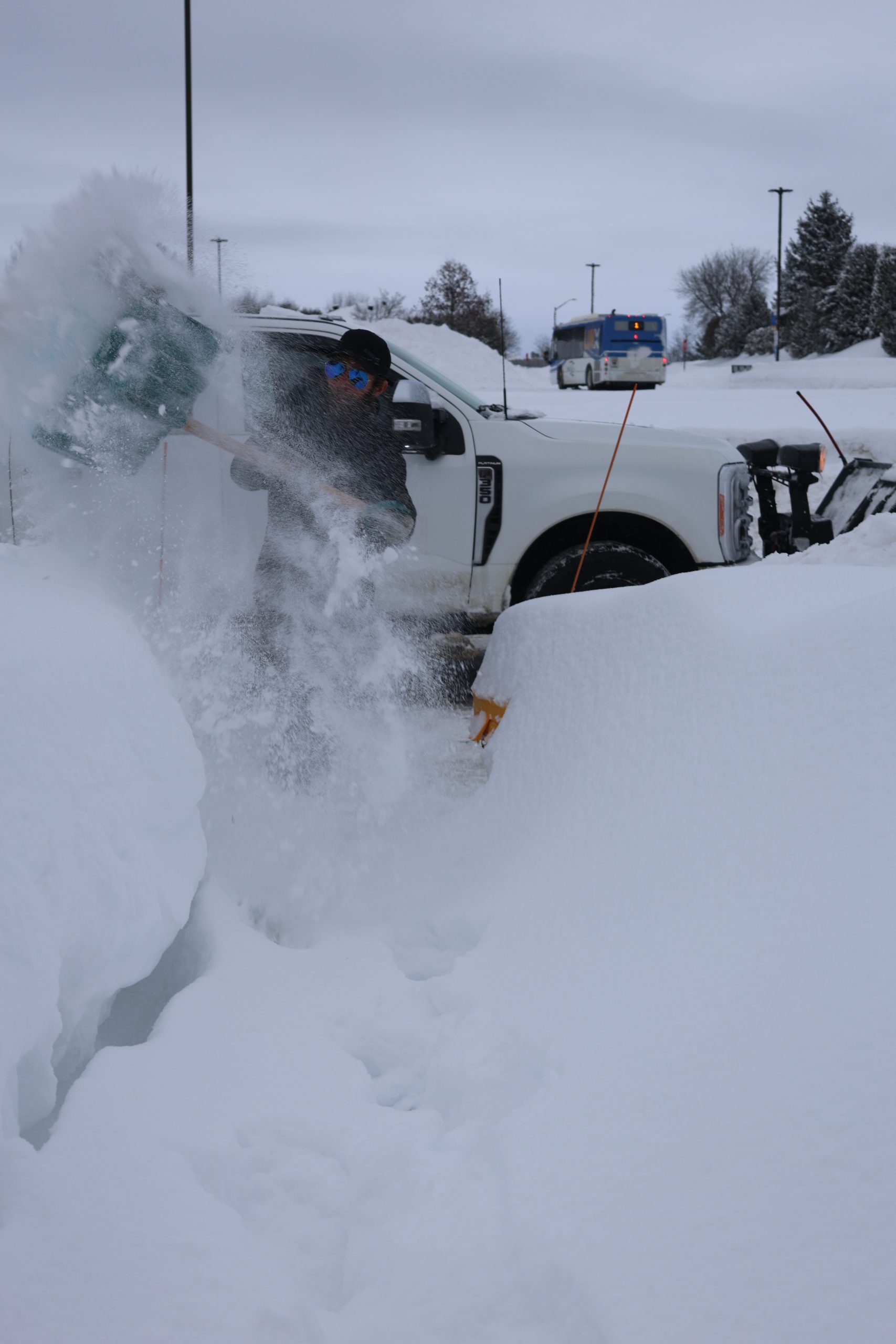
Vehicles only represent part of a commercial site. Customers, employees and delivery drivers also use walkways, stairs and entrances. Therefore, commercial snow removal services should include a clear plan for pedestrian areas. Crews may use shovels, snow blowers or compact equipment depending on the property.
In addition, they should pay special attention to accessible routes and high-traffic entrances. For example, a retail property may need its front entrance cleared before opening. Meanwhile, an industrial site may prioritize employee walkways and loading access. The contractor should know those priorities before the first storm.
Commercial walkway snow clearing in Collingwood, Ontario
Commercial Snow Removal Services Should Include Ice Management
Plowing alone does not solve every winter condition. Snow can melt during the day and refreeze later. In addition, vehicle traffic can pack thin layers of snow into slippery surfaces. Therefore, a complete commercial snow removal plan should address ice control. Property managers should ask which areas receive treatment and what triggers an application. For example, entrances, sidewalks and ramps may need different attention than a large parking lot. Also, the contractor should monitor changing temperatures after snowfall ends. That follow-up matters because winter hazards can develop long after the plow leaves.
How Commercial Snow Removal Services Handle Long Storms
A quick overnight snowfall creates one type of workload. However, a long Georgian Bay snow event creates another. During prolonged snowfall, waiting until the storm ends may not work for an active commercial property. Therefore, crews may need to make several passes.
For example, they may maintain main drive lanes, emergency routes and entrances while snow continues to fall. Then, they can complete a final cleanup after conditions improve. In addition, property managers should know how the contractor communicates during extended events. A clear storm plan helps everyone understand why crews may visit more than once.
Commercial Snow Removal Services Need a Snow Storage Plan
Snow has to go somewhere.
At the beginning of winter, most properties have plenty of storage space. However, repeated storms can quickly fill those areas. As piles grow, they can reduce parking, block sightlines, narrow entrances and interfere with loading zones. Therefore, commercial snow removal services should include a snow storage strategy. A contractor should identify approved stacking areas before winter begins.
In addition, crews may need loaders to stack snow higher or relocate large piles. Eventually, some properties may need off-site snow hauling. Planning those options early prevents a storage problem from turning into an operational problem later.
Match Equipment to the Property
Different machines solve different problems.
A plow truck can clear long drive lanes quickly. Meanwhile, a loader can move heavy snow and manage large piles. Compact equipment may work better around narrow walkways or tight loading areas. Therefore, contractors should choose equipment based on the property rather than using the same machine everywhere. In addition, they should plan for equipment problems. Breakdowns can happen during storms. As a result, commercial operators should have enough backup capacity to continue service when one machine needs attention. Property managers do not need to know every equipment detail. However, they should understand the basic plan.
Protect Priority Access
Every property has areas that cannot wait. Fire routes, emergency exits, accessible entrances and loading zones may all carry different priorities. Therefore, property managers should identify critical access areas during the pre-season review. For example, a medical office may prioritize accessible parking and entrances. Meanwhile, a warehouse may need loading docks open before early deliveries arrive. The contractor can then organize service around those needs. As a result, crews spend their time where the property needs them most.
Clear Communication
Good winter service depends on communication as much as equipment. Storms happen overnight, on weekends and during holidays. Therefore, both sides should know who handles questions and service requests. Property managers should know whom to contact if conditions change. Likewise, the contractor should know who can approve extra work.
For example, a tenant may report a problem, but the property manager may control contract changes. A simple communication chain prevents conflicting instructions. In addition, contractors should report major site issues when they find them.
Document Work
Service records help property managers understand what happened during each weather event. Therefore, commercial snow removal services should include a documentation process. Useful records may include arrival times, departure times, areas serviced, weather conditions and ice-control applications. In addition, crews may record unusual conditions or additional requests.
These records create a clearer winter history. As a result, property managers can review patterns, answer questions and improve the next season’s plan.
Commercial Snow Removal Services Should Explain Pricing Clearly
A complete scope also needs clear pricing. Commercial contracts may use seasonal rates, per-push rates or other billing structures. Therefore, property managers should understand what the base price covers. They should also ask about additional services.
For example, snow hauling, extra loader work or unusual ice-control needs may carry separate charges. In addition, the contract should explain how larger storms affect billing. Clear pricing helps property managers budget without guessing.
Pre-Season Planning Makes Commercial Snow Removal Services Stronger
The best time to solve winter problems is before winter. During a pre-season site review, contractors can inspect curbs, drainage areas, parking layouts, loading zones and snow storage locations. In addition, they can identify obstacles before snow hides them. Property managers can also explain operating hours and site priorities. Therefore, the contractor enters winter with a much clearer picture of the property. That preparation helps crews respond faster once storms begin.
What Should Property Managers Expect?
At minimum, property managers should expect a clear plan for vehicle areas, pedestrian routes, ice management, snow storage, communication and documentation.
However, every property needs a slightly different mix. Therefore, the contractor should adjust the plan to the site. A retail plaza may need frequent entrance clearing. Meanwhile, an industrial property may focus more heavily on loading areas and overnight access. The strongest service plan reflects those differences.
Commercial Snow Removal Services in Collingwood
Commercial snow removal services should keep a property functioning throughout winter, not simply move snow after a storm.
Therefore, property managers should look for a contractor that plans around access, traffic, ice, storage and communication.
Ainger Snow Removal provides commercial snow removal in Collingwood for properties that want a clear winter service plan.
In addition, follow Ainger Group on LinkedIn for winter property-management tips and snow-removal updates.
Planning service for your commercial property? Request a commercial snow removal quote.