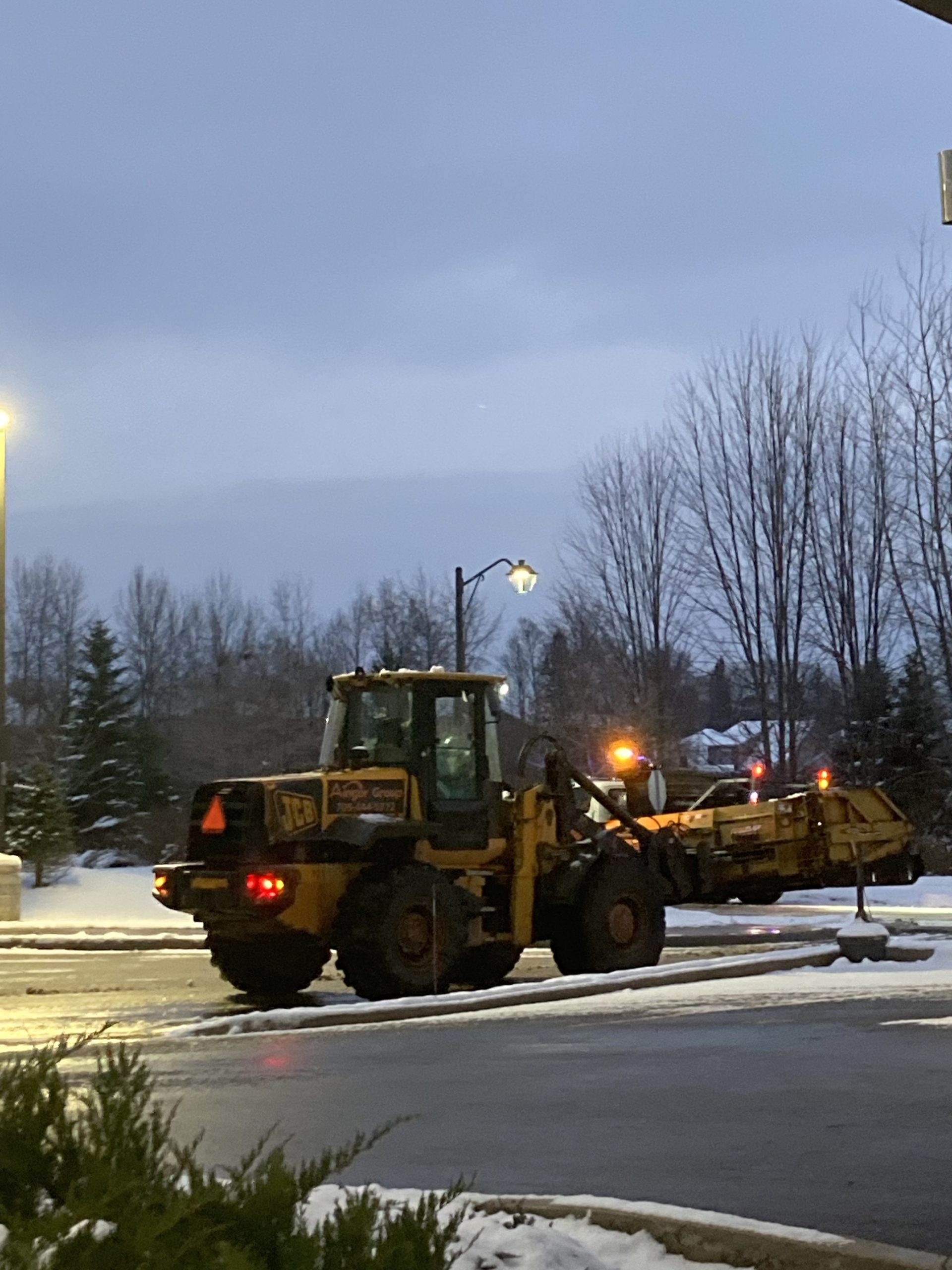
Snow Hauling: When Commercial Properties Run Out of Space
Posted on 19 October 2026
RSnow hauling becomes important when a commercial property has plenty of snow but nowhere useful left to put it. Early winter plowing can usually push accumulation into designated storage areas. However, repeated storms can eventually turn those areas into large snowbanks that reduce parking, visibility and usable space.
For Collingwood property managers, the problem often develops gradually rather than after one storm. Therefore, a good winter plan should consider what happens when normal snow storage stops working.
What Is Snow Hauling?
Snow hauling removes accumulated snow from the property instead of simply pushing it somewhere else on-site. Crews typically use loaders or similar equipment to gather large piles and transfer the snow for removal.
This service differs from ordinary plowing. Plowing clears active areas and creates snowbanks, while hauling deals with the buildup those operations leave behind.
As a result, snow hauling usually becomes part of the winter plan later in the season or after several significant storms.
Why Commercial Properties Eventually Need Snow Hauling
Every commercial property has a limited amount of snow-storage space. At first, parking-lot edges, landscaped areas and designated corners may provide plenty of room.
However, each snowfall adds more material to those locations. Snowbanks become wider and taller, while the usable property gradually becomes smaller.
Eventually, continuing to push snow into the same areas may no longer make sense. That is when hauling or relocation can become the better option.
Snow Hauling vs Snow Relocation
Snow hauling and snow relocation solve similar problems, but they are not exactly the same. Relocation moves existing piles to another area on the same property. For example, a loader may move snow away from customer parking and place it in a larger storage area behind the building.
Snow hauling goes one step further by removing the accumulation from the site. Therefore, hauling becomes useful when the property does not have enough suitable space anywhere on-site.
Snowbanks Can Reduce Valuable Parking
Parking spaces are often the first casualty of growing winter snowbanks. A pile that begins neatly along the edge of a lot can slowly spread into nearby stalls.
Losing one or two spaces may not matter at first. However, repeated accumulation can eventually remove a meaningful portion of available parking.
For retail, restaurant and other customer-facing properties, that loss can directly affect how the site functions. Therefore, property managers should monitor snowbanks before they consume several spaces.
Snow Hauling Can Help Protect Sightlines
Large snow piles can also affect visibility near entrances and exits. Drivers may have difficulty seeing approaching vehicles when banks become too high near access points.
Therefore, snow placement should always consider sightlines. If a pile begins interfering with visibility, crews may need to relocate or remove it even when some storage space technically remains.
This issue can become especially important at busy commercial entrances. Good snow management protects usable space while also preserving practical vehicle movement.

Snowbanks reducing available space at a winter property in Collingwood, Ontario
Loading Areas Need Usable Space Too
Commercial snow management is not only about customer parking. Loading docks, delivery routes and service areas may also lose room as winter progresses.
A growing snowbank can narrow a truck route or reduce turning space near a loading area. As a result, delivery vehicles may have less room to maneuver safely.
Therefore, properties with regular deliveries should protect these areas from the beginning. Snow hauling can help restore space when ordinary plowing starts crowding the site.
Accessible Parking Should Stay Part of the Plan
Snow storage should never treat accessible parking as convenient overflow space. These stalls and their access routes need to remain usable throughout winter.
However, large piles nearby can still create problems by narrowing routes or reducing visibility. Therefore, contractors and property managers should identify these areas during pre-season planning.
If snowbanks begin affecting the space around accessible parking, relocation or hauling may become necessary earlier than elsewhere on the property.
When Snow Hauling Makes Sense After Repeated Storms
One heavy snowfall does not automatically mean a property needs hauling. Often, crews can stack or reorganize accumulation on-site first.
However, several storms close together can change the situation quickly. Existing piles may still be large when the next snowfall arrives, leaving crews with fewer places to push new snow.
As a result, the property can reach its storage limit surprisingly fast. Planning ahead allows hauling to happen before the lot becomes cramped.
Snow Hauling After Long Snow Events
Long-duration storms can create similar pressure. Crews may make several passes to maintain entrances, drive lanes and parking areas while snow continues falling.
Each pass moves more snow toward storage areas. Therefore, one prolonged event can build snowbanks much faster than a short snowfall.
After the storm, the contractor may reassess available space. If the property has lost too much usable area, relocation or hauling may become the next step.
Loader Work Is Often Part of Snow Hauling
Plow trucks work well for moving fresh accumulation across open pavement. However, established snowbanks often require heavier equipment.
Loaders can break down large piles, move dense accumulation and transfer snow more efficiently. Therefore, they often become an important part of snow hauling operations.
This is another reason commercial properties benefit from contractors with different equipment options. The machine used for routine plowing may not be the best machine for mid-winter snow management.
Packed Snow Becomes Harder to Manage
Older snowbanks do not remain fluffy. Over time, the snow settles, freezes and becomes more compact.
Temperature swings can make those piles even denser. Therefore, waiting until the property is completely out of room can make the eventual cleanup more difficult.
Earlier relocation or hauling may allow crews to work with more manageable conditions. In addition, it can preserve space before the next storm arrives.
Snow Hauling Can Restore Parking Capacity
One of the clearest benefits of hauling is simple: the property gets space back.
Once crews remove large piles, previously lost parking stalls may become usable again. Drive lanes can widen, and entrances may regain better visibility.
Therefore, snow hauling can be viewed as space management rather than just snow removal. Commercial properties need enough room to operate regardless of how much snow has fallen that winter.
Snow Storage Areas Should Be Chosen Before Winter
The best time to decide where snow will go is before the first storm.
Contractors and property managers can identify areas that preserve parking, sightlines and traffic movement. They can also avoid piling snow near important entrances or other sensitive locations.
However, even a well-designed storage plan has limits. Therefore, the pre-season discussion should also cover what happens once those areas become full.
Snow Hauling Should Not Be an Unexpected Mid-Winter Conversation
Property managers should understand whether snow hauling falls within the regular contract or requires separate approval. The answer can vary depending on the service agreement.
Therefore, ask about it before winter begins. Knowing how additional loader work, relocation and hauling are handled makes budgeting much easier.
It also creates a faster decision process during a busy storm cycle. Nobody wants to start reviewing contract details while the parking lot is disappearing behind a small white mountain range.
How Property Layout Affects Snow Hauling
Some properties can store a large amount of snow without affecting operations. Others have almost no extra room.
A wide industrial site may have distant storage areas that keep piles away from daily traffic. Meanwhile, a tight retail property may have parking, sidewalks and neighbouring lots on nearly every side.
Therefore, site layout strongly affects how soon hauling becomes necessary. Two properties with similar square footage can have completely different winter storage capacity.
Properties With Limited Snow Storage Need Earlier Planning
Dense commercial areas often have less flexibility. Snow cannot simply be pushed wherever there appears to be open ground.
Neighbouring properties, sidewalks, landscaping and public roads can limit storage choices. Therefore, contractors need a clear plan for where accumulation belongs.
When those locations fill, hauling may become the only practical way to create more room. Waiting too long can make normal plowing increasingly difficult.
Snow Hauling and Customer Experience
Customers rarely think about snow-storage strategy, but they notice the results.
A parking lot that gradually loses spaces can become frustrating. Large piles near entrances can also make the property feel cramped and harder to navigate.
Therefore, proactive snow management can help the site remain functional throughout winter. Hauling may happen behind the scenes, but the restored space is very visible.
Snow Hauling and Employee Access
Employees can face the same problems. Reduced parking, narrow drive lanes and large banks around staff areas can make daily access harder.
In addition, businesses with shift changes may need substantial parking capacity at specific times. Losing several spaces can create unnecessary congestion.
Therefore, employee needs should also factor into snow-storage planning. Commercial winter service should support the people using the property, not just clear pavement.
Meltwater Can Become Another Snowbank Problem
Large piles do not only occupy space. They can also create water-management issues when temperatures rise.
Melting snow may run across pavement during the day. Then, colder overnight temperatures can cause that water to refreeze.
Therefore, snow-storage locations should consider drainage as well as available space. Moving or hauling a poorly placed pile may help address a recurring winter problem.
When Should Property Managers Consider Snow Hauling?
There is no single snowbank height that automatically triggers hauling. Instead, the decision should reflect how the property is functioning.
Warning signs can include:
- Parking stalls disappearing into snowbanks
- Reduced sightlines near entrances
- Narrower drive lanes
- Limited turning space for trucks
- Snowbanks interfering with pedestrian routes
- Storage areas approaching capacity
- Poor drainage around large piles
- No practical location for the next snowfall
- Repeated storms expected before existing piles can shrink
If several of these issues appear at once, waiting for another storm may make the problem worse.
Snow Hauling May Be Better Before the Next Storm
Weather timing matters. A property may technically have enough room for today’s snow but not enough for another significant event.
Therefore, contractors may recommend moving or hauling accumulation before the next storm arrives. That decision creates new storage capacity and gives crews more room to work.
It can also prevent rushed hauling during active snowfall. Whenever possible, managing existing piles between events makes the next response easier.
Why Snow Hauling Is Different From Routine Plowing
Routine plowing focuses on keeping active areas usable. Snow hauling focuses on managing the accumulated material created by weeks or months of winter service.
Therefore, the equipment, labour and timing may differ. Crews may need loaders and transportation rather than standard plow trucks alone.
That difference can also affect pricing. Property managers should understand whether hauling is included, available as an additional service or handled under separate terms.
Snow Hauling Cost Depends on the Property
The cost of hauling can vary because every site creates a different job. The amount of accumulated snow, equipment required and accessibility of the piles can all affect the scope.
In addition, a property with several separate piles may require more handling than one centralized storage area. Therefore, generic pricing rarely tells the whole story.
A site-specific plan gives property managers a more useful understanding of what may be involved.
Good Commercial Snow Management Delays the Need for Hauling
Proper snow placement from the first storm can preserve storage space longer. Crews should avoid spreading piles unnecessarily across valuable parking areas.
Instead, the contractor can use planned storage locations and adjust pushing patterns as the season develops. In addition, loaders may reorganize piles before full hauling becomes necessary.
Therefore, hauling should be part of a broader strategy rather than the only response to poor snow placement.
Snow Hauling Requires Planning Beyond the Parking Lot
Removing a pile from the immediate parking area is only one part of the job. Crews also need to manage the snow appropriately after it leaves that space.
For property managers, the main concern is making sure the contractor has a clear process. Therefore, snow hauling should be discussed as a defined commercial service rather than an improvised last-minute solution.
Professional planning keeps the work organized and reduces disruption around the property.
Questions to Ask About Snow Hauling
Before winter, ask your contractor how snow storage will work and when additional management may become necessary. Find out whether loaders, relocation and hauling are available if the property starts running out of room.
Property managers should also understand how additional work gets approved and documented. That way, everyone knows what happens before the property reaches its storage limit.
Snow Hauling for Collingwood Commercial Properties
Snow hauling becomes valuable when normal plowing can no longer preserve enough usable space. Large banks may reduce parking, limit visibility, crowd loading areas or leave crews with nowhere practical to place the next snowfall.
Therefore, Collingwood property managers should treat snow storage as a season-long planning issue. The goal is not to remove every snowbank immediately, but to act before accumulated snow starts interfering with the property.
Learn more about commercial snow removal in Collingwood and our broader commercial snow removal services.
You can also follow Ainger Group on LinkedIn for commercial winter planning tips and seasonal updates.
Running out of room for snow on your property? Request a commercial snow removal quote.