Sidewalk Plow vs Hand Clearing: What Works on Commercial Walkways?
Posted on 8 November 2026
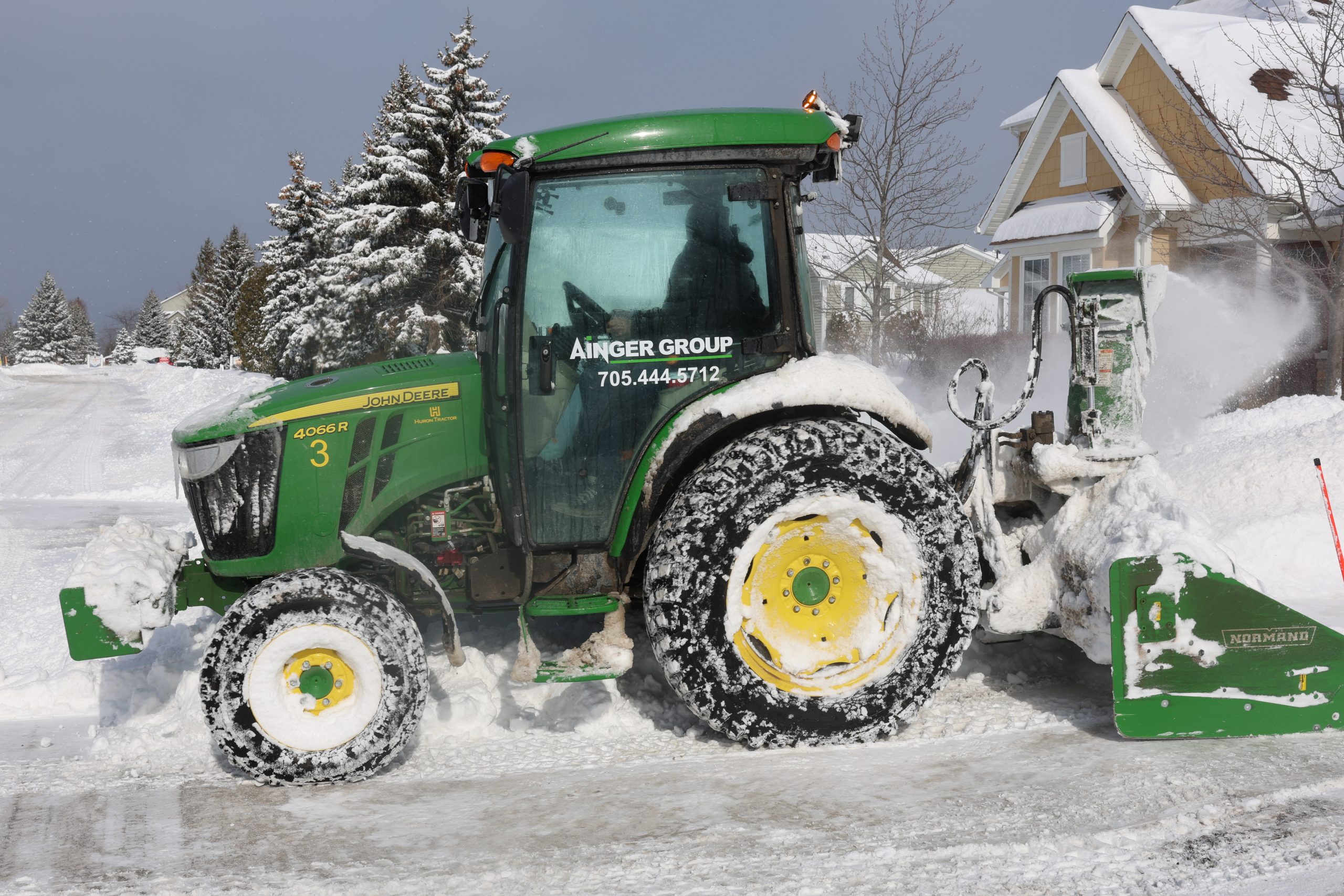
A sidewalk plow can make commercial pedestrian routes much faster to clear, but it does not eliminate the need for hand work. Walkway width, entrances, stairs and surrounding obstacles all affect which method performs best.
For Collingwood property managers, the strongest approach is usually not choosing one method over the other. Instead, compact equipment and manual clearing should work together.
Where a Sidewalk Plow Works Best
A sidewalk plow performs especially well on longer, open pedestrian routes.
Wide sidewalks around commercial buildings, campuses and larger properties can give compact equipment enough room to operate efficiently.
Therefore, machines can clear significantly more surface than a hand crew working the same distance.
However, the route still needs enough room for turning and snow storage.
A Sidewalk Plow Needs Space to Operate
The machine needs more than just enough width for its blade.
Operators also need room to turn, reverse and work around landscaping, poles, curbs and other property features.
Therefore, a walkway that appears wide enough may still contain sections where manual clearing makes more sense.
Pre-season site planning helps identify these pinch points before snow hides the boundaries.
Hand Clearing Works Better Around Entrances
Building entrances usually require more detailed attention than long open sidewalks.
Doors, stairs and tight corners often limit machine access. Therefore, shovels remain useful for finishing sections that compact equipment cannot reach safely.
A sidewalk plow may bring the clearing operation close to the door.
Hand work completes the last few metres.
Sidewalk Plow vs Hand Clearing Around Curb Cuts
Curb cuts connect pedestrian routes with parking areas.
Unfortunately, they can also become collection points for snow pushed by larger parking-lot equipment.
Therefore, sidewalk crews and lot operators need to work together.
A compact machine may reopen the wider transition, while hand clearing can finish tight edges around ramps or curbs.
Commercial Properties Often Need Both Methods
For many commercial sites, the answer is not sidewalk plow or shovel.
It is sidewalk plow and shovel.
Machines provide productivity across long routes, while hand crews add detail around entrances and obstacles.
That combination provides both speed and flexibility.
Surface Type Can Affect Equipment Choice
Commercial pedestrian routes may include concrete, pavers or other finished surfaces.
Therefore, equipment selection should consider the surface as well as the route width.
Irregular areas or delicate edges may need a more careful approach.
The property should determine the method rather than forcing one machine everywhere.
Snow Storage Matters on Sidewalks Too
Snow removed from a sidewalk still needs somewhere to go.
Repeatedly pushing it toward the same narrow edge can gradually reduce the usable width of the route.
Therefore, contractors should identify sidewalk storage areas before winter.
Blowing or relocating accumulation may become necessary as banks grow.
A Sidewalk Plow Can Improve Efficiency
Long commercial walkways can require significant labour to clear entirely by hand.
Compact equipment allows crews to cover larger areas more quickly when conditions and route dimensions suit the machine.
Therefore, a sidewalk plow can help contractors maintain substantial pedestrian networks more efficiently during active snowfall.
That efficiency becomes especially valuable during long-duration storms.
Long Storms May Require Repeat Clearing
A sidewalk cleared early in the morning can be covered again several hours later.
Therefore, pedestrian service may require repeat passes while snow continues.
Early visits can focus on maintaining access. Later visits can provide more detailed cleanup once conditions improve.
Property managers should understand that difference before winter begins.
Busy Entrances Need Additional Attention
High-traffic entrances can become packed quickly.
Foot traffic compresses fresh snow and creates different conditions from quieter sections of the property.
Therefore, these areas may need more frequent attention than long open walkways.
A manual crew can sometimes provide faster detail work while machinery continues servicing larger routes.
Accessible Routes Should Remain Connected
An accessible parking space is only useful when the route to the building remains usable.
That route may include the parking stall, access aisle, curb transition and sidewalk.
Therefore, crews need to think about the complete path rather than maintaining each section separately.
Parking-lot and pedestrian operations should work from the same site plan.
Parking Lot Plows Can Create Sidewalk Work
One snow-removal crew can accidentally undo another crew’s work.
A parking-lot plow may move accumulation toward a curb transition after the sidewalk route was already cleared.
Therefore, final pedestrian cleanup often happens after larger equipment finishes nearby.
Coordination reduces repeated work.
Sidewalk Snow Storage Can Affect Landscaping
Landscape beds may look like convenient snow-storage areas early in winter.
However, repeated piling can affect walkway width and reduce available storage later.
Therefore, contractors should think about how those areas will look after several storms.
Convenient snow placement is not always good long-term snow placement.
Hand Clearing Still Matters Around Stairs
Compact equipment cannot service every surface.
Steps, raised entrances and tight corners will often require manual work regardless of how advanced the equipment fleet becomes.
Therefore, the traditional shovel has managed to survive another round of technological disruption. 😌
Sometimes it is simply the right tool.
Sidewalk Plow Service Needs Backup
Compact winter equipment can experience mechanical problems just like larger machines.
Therefore, commercial contractors should have another way to maintain pedestrian routes if a primary unit becomes unavailable.
That may involve another machine or additional manual crews.
What matters is having an alternative.
Ice Management Is Separate From Snow Clearing
A sidewalk can look clear and still develop slippery conditions.
Freezing rain, compacted snow and refreezing may require additional treatment.
Therefore, property managers should understand whether ice management is included and how it is triggered.
A sidewalk plow handles accumulation. It does not solve every winter surface condition.
What Should Property Managers Ask?
Before winter, ask:
- Which routes use compact equipment?
- Which areas require hand clearing?
- How are entrances and stairs handled?
- How are accessible routes maintained?
- What happens at curb cuts after lot plowing?
- Where is sidewalk snow stored?
- What happens during long storms?
- What backup equipment is available?
- Is ice management included?
Those answers help determine whether pedestrian service has been properly planned.
Sidewalk Plow Service in Collingwood
A sidewalk plow can dramatically improve productivity across the right commercial property.
However, manual clearing remains important around doors, stairs, corners and other detailed areas.
For Collingwood property managers, the strongest pedestrian plan uses both methods where they work best.
Learn more about commercial snow removal in Collingwood or explore our broader commercial snow removal services.
You can also follow Ainger Group on LinkedIn for commercial winter-planning tips and seasonal updates.
Need a complete parking-lot and pedestrian winter plan? Request a commercial snow removal quote.