Corporate Snow Removal Planning: What Facility Managers Need Before Winter
Posted on 3 September 2026
Corporate snow removal works best when the planning happens before the first storm. For facility managers and property teams, waiting until snow is already falling can leave important questions unanswered. Where can snow be stacked? Which entrances need priority service? When should crews arrive? Who documents completed work?
A clear winter plan gives both the property manager and snow removal contractor a better understanding of the site before conditions become difficult.
For commercial properties in Collingwood, early planning is especially useful because one property can include parking areas, loading zones, sidewalks, emergency access routes and high-traffic entrances.
Why Corporate Snow Removal Should Be Planned Early
A commercial property is rarely as simple as pushing snow from one side of a parking lot to another.
Employees may arrive before customers. Delivery trucks need room to move. Fire routes must remain accessible. Pedestrian areas may require different equipment than parking lots.
Therefore, effective corporate snow removal starts with understanding how the property operates.
Early planning gives facility managers time to identify:
- High-priority entrances and exits
- Employee and visitor parking areas
- Loading docks and delivery routes
- Fire routes and emergency access
- Sidewalks and pedestrian crossings
- Accessible parking spaces and ramps
- Areas where snow can safely accumulate
- Locations where snow storage could create visibility problems
These details can then become part of a clear service plan.
Start With a Detailed Site Map
One of the most useful tools in corporate snow removal planning is a site map.
A contractor should understand more than the property address. They should know how people, vehicles and equipment move through the site.
For example, a large commercial property may have a front customer entrance, a separate employee parking area and loading docks behind the building.
Those areas may all require different priorities during a storm.
A site map can identify:
- Parking lot boundaries
- Building entrances
- Sidewalk routes
- Loading areas
- Fire hydrants
- Garbage and recycling areas
- Utility equipment
- Snow storage areas
- Drainage points
- Curbs, islands and other obstacles
It can also show areas where snow should not be placed.
Creating this plan before winter reduces the amount of decision-making required during an active storm.
Establish Snow Removal Service Triggers
Another important part of corporate snow removal is agreeing on when service begins.
Different properties have different operating requirements. A quiet industrial site may have different priorities than a busy retail property with customers arriving throughout the day.
Facility managers should understand how their snow removal agreement handles different conditions.
Questions may include:
- What snowfall amount triggers service?
- Does service continue while snow is still falling?
- When are parking areas cleared?
- When are sidewalks addressed?
- How is drifting snow handled?
- How are freezing rain and icy conditions managed?
- What happens during long-duration storms?
There should also be a clear understanding of what happens after municipal plows create windrows near entrances or access points.
Clear expectations make it easier for both sides to manage a storm.
Identify Priority Areas Before Snow Arrives
Not every part of a property carries the same operational importance.
Before winter, facility managers should determine which areas need attention first.
Emergency Access
Fire routes, emergency exits and critical access areas should be identified clearly.
Snow should not be stored where it blocks these routes or reduces access.
Main Entrances
Customer and employee entrances often become high-traffic areas quickly.
These areas may require repeated attention during long storms rather than one clearing after the snowfall ends.
Accessible Routes
Accessible parking spaces, curb cuts and ramps should be included in the snow plan.
Simply clearing the main parking area does not automatically create a usable pedestrian route.
Loading Zones
Businesses that rely on regular deliveries should identify loading docks and truck routes as part of their corporate snow removal plan.
A poorly placed snow pile can significantly reduce turning space for large vehicles.
Plan Snow Storage Before the Parking Lot Fills Up
Snow has to go somewhere.
That sounds obvious, but snow storage can become one of the biggest challenges later in the season.
A pile that seems harmless after the first snowfall may grow significantly after several storms.
Large piles can reduce parking capacity, narrow drive lanes or block sightlines near entrances.
Therefore, facility managers should identify preferred snow storage areas before winter begins.
Consider:
- Available parking capacity
- Vehicle sightlines
- Drainage when snow melts
- Pedestrian routes
- Fire access
- Loading areas
- Landscaping
- Space needed for future storms
Some properties may eventually require snow relocation or hauling if on-site storage becomes limited.
Planning for that possibility ahead of time is much easier than discovering the problem halfway through winter.
Corporate Snow Removal Is More Than Plowing

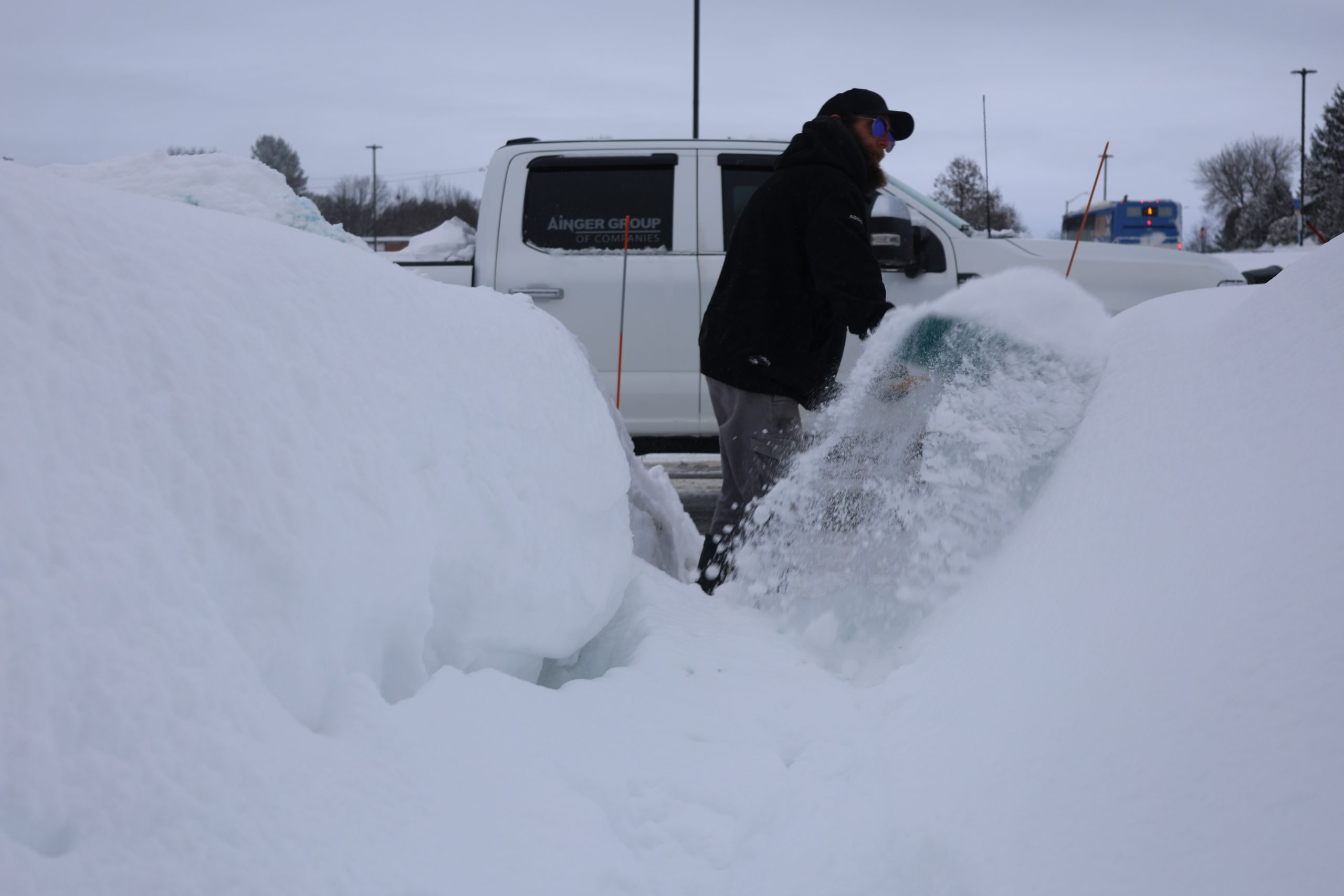
Commercial snow removal equipment in Collingwood, Ontario
A strong winter plan should consider the entire property.
Parking lot plowing is important, but commercial properties can also require sidewalk clearing, snow blowing, ice management and ongoing monitoring.
For example, a parking lot may look clear while an entrance remains slippery.
Likewise, a sidewalk may be cleared while a snowbank blocks visibility for drivers leaving the property.
Effective commercial snow removal in Collingwood should consider how these areas work together.
The goal is not simply to move snow. It is to maintain usable access throughout the property as winter conditions change.
Decide How Communication Will Work During Storms
Storm communication should not be invented during the storm.
Facility managers should know who their main contact is and how service questions are handled.
Likewise, the snow removal contractor should know who has authority to make decisions about the property.
This becomes especially important during larger weather events.
For example, a property manager may need to approve snow relocation or request additional attention near a loading area.
Clear communication prevents several people from providing different instructions to crews working on the same property.
Documentation Should Be Part of the Winter Plan
Commercial snow management also benefits from consistent documentation.
Depending on the service agreement and property, records may include:
- Service dates
- Approximate service times
- Areas treated
- Snowfall conditions
- Ice-control applications
- Additional service requests
- Site observations
Documentation creates a clearer history of what occurred during each weather event.
It also helps facility managers evaluate their winter program over time.
If one entrance repeatedly creates problems, for example, that information can be used to adjust the plan.
Review How the Property Operates
Good corporate snow removal planning should reflect the actual business.
A contractor should know when the property becomes active.
Ask questions such as:
- When do employees normally arrive?
- When do customers begin arriving?
- Are there overnight shifts?
- When are deliveries scheduled?
- Are there weekend operations?
- Are some entrances closed during certain hours?
A property that begins operating at 5:00 a.m. has different requirements from one that opens at 9:00 a.m.
Understanding those patterns helps create a snow management plan around the property rather than trying to make the property fit a generic route.
Look for Problems Before They Are Covered in Snow
September is a useful time to walk through a commercial property and identify winter obstacles.
Once several centimetres of snow cover the ground, curbs, parking islands and other features become harder to see.
Facility managers should look for:
- Raised curbs
- Speed bumps
- Drainage areas
- Low landscaping
- Parking stops
- Sign posts
- Narrow sidewalk sections
- Utility covers
- Damaged pavement
These areas can then be marked or included on the site map.
A little preparation now can prevent a lot of guesswork in January.
What Facility Managers Should Confirm Before Winter
Before the first major snowfall, a commercial property should ideally have answers to several basic questions.
Who is responsible for snow removal?
What areas are included in the service?
Where can snow be stored?
Which areas receive priority?
When does service begin?
How are sidewalks and entrances handled?
How is ice management addressed?
Who communicates with the contractor?
How is completed work documented?
If those answers are clear, the property is already much better prepared for winter.
Corporate Snow Removal Planning in Collingwood
Winter weather is unavoidable. Disorganized winter operations are not.
The best corporate snow removal plans are created while parking lines, curbs, loading areas and sidewalks are still visible.
That gives facility managers and contractors time to understand the property, establish priorities and solve potential problems before the first significant snowfall.
Ainger Snow Removal works with commercial properties in Collingwood to build winter service plans around how each site actually operates.
If your property still needs a plan for the coming winter, you can request a commercial snow removal site review before the season begins.