Industrial Snow Removal: What Large Barrie Properties Need
Posted on 5 November 2026
Industrial snow removal requires a different approach from clearing a small office parking lot. Warehouses, manufacturing sites and distribution properties can include truck routes, loading areas, employee parking and large open spaces that all need to function during winter weather.
For Barrie facility managers, the strongest winter plan goes beyond simply assigning a plow truck. Equipment capacity, operating hours, snow storage and traffic patterns all influence how successfully the property can be maintained.
Why Industrial Snow Removal Is Different
Industrial properties often contain several types of traffic at the same time.
Transport trucks may be arriving while employees are changing shifts. Delivery vehicles, contractors and service vehicles may also need access during active snowfall.
Therefore, industrial snow removal needs to support how the property actually operates.
The plan cannot assume the entire site will conveniently become empty every time snow begins.
Truck Routes Need to Remain Usable
Large vehicles require more room to turn and maneuver than passenger vehicles.
Snowbanks can slowly reduce that room as winter progresses. Therefore, internal truck routes and turning areas should be identified before the season begins.
Operators should also know which areas must remain open during active snowfall.
A truck route buried behind a beautiful parking-lot snowbank is not especially helpful.
Loading Areas Need Their Own Plan
Loading docks can become operational bottlenecks when snow accumulates around approach areas.
Even relatively small snowbanks can reduce trailer maneuvering space. Therefore, contractors should understand where trucks need to reverse, turn and approach the dock.
Property managers should also communicate expected delivery schedules when they affect winter service.
The goal is to preserve enough working space for the facility to continue operating.
Industrial Snow Removal Requires Different Equipment
One machine rarely handles every part of a large industrial site equally well.
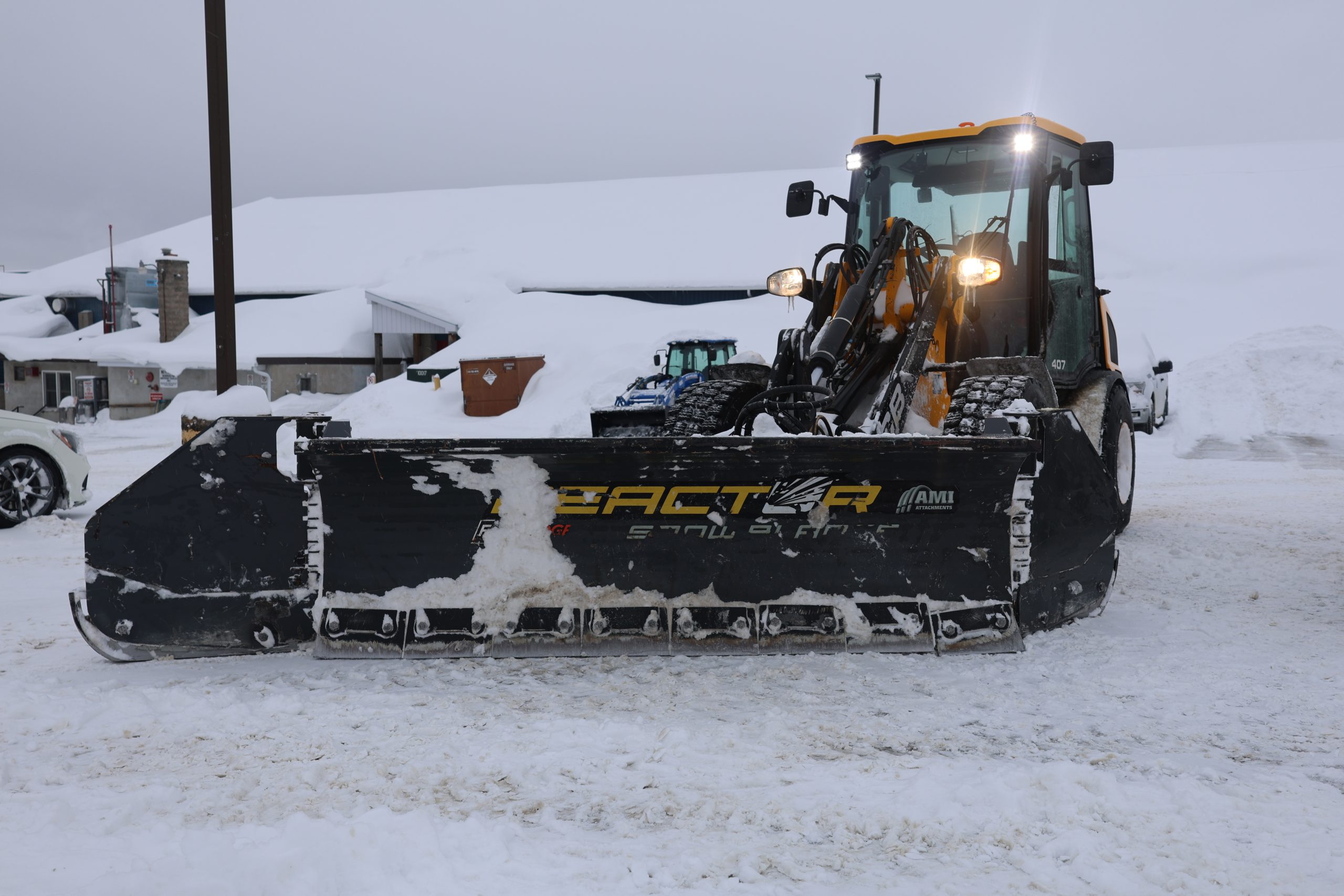
Plow trucks can clear open lanes efficiently. Loaders can manage large snowbanks, while compact equipment may work better in smaller or tighter areas.
Therefore, industrial snow removal benefits from fleet flexibility.
The contractor should choose equipment based on the property rather than trying to make every area fit one machine.
Compact Loaders Can Support Tight Areas
Compact loaders can become useful around loading zones, storage areas and smaller sections where larger machines are less efficient.
They can also support snow relocation when banks begin reducing usable space.
However, compact equipment does not automatically replace larger loaders or plow trucks.
Each machine solves a different part of the winter operation.
Employee Parking Creates Timing Challenges
Large industrial properties may have significant employee parking demands.
Shift changes can quickly fill a lot that was relatively empty an hour earlier. Therefore, contractors benefit from understanding when those changes occur.
A quieter window may provide the best opportunity for detailed clearing.
Occupied sections may then receive follow-up work after vehicles move.
Long Storms Need Repeated Service
Industrial properties often cannot wait until the snowfall completely stops.
During prolonged events, crews may maintain priority truck routes, entrances and employee access before returning for detailed cleanup later.
Therefore, industrial snow removal may happen in stages.
Property managers should understand what the site is expected to look like during active snowfall versus after final cleanup.
Priority Areas Should Be Identified Early
Not every section needs attention at the same moment.
Emergency access, main truck lanes, loading areas and employee entrances may carry greater operational importance.
Therefore, those priorities should be established before winter.
Operators can then focus limited time and equipment where it matters most during demanding conditions.
Snow Storage Can Become an Operational Problem
Industrial properties often appear to have plenty of open land.
However, not every open area makes good snow storage.
Large banks can affect truck visibility, future plowing patterns, drainage and access to other parts of the property.
Therefore, storage areas should be selected strategically rather than simply using the nearest open corner.
Snowbanks Change the Property Over Time
An industrial site in February can operate very differently from the same site in early December.
Repeated storms gradually change turning areas, parking capacity and sightlines.
Therefore, contractors need to reassess how the property functions as snowbanks grow.
A winter plan should adapt rather than assume the original layout stays unchanged.
Snow Relocation Can Preserve Working Space
Not every property needs snow hauled away immediately.
Loaders may be able to relocate accumulated snow toward a larger storage zone elsewhere on the site.
That can help restore parking or turning room without removing the material completely.
However, relocation still requires enough suitable property space.
Snow Hauling May Eventually Be Necessary
Some industrial properties eventually reach their storage limit.
When snowbanks begin interfering with truck traffic, parking or visibility, removal may become the more practical option.
Therefore, facility managers should understand whether snow hauling is available and how additional work gets approved.
That decision is easier before another large storm arrives.
Industrial Snow Removal Includes Pedestrian Areas
Industrial sites still have employees entering buildings on foot.
Walkways, doors and staff entrances require smaller equipment or manual clearing. Therefore, pedestrian routes should be clearly included in the winter scope.
A cleared truck yard does not solve the whole property if staff access remains buried.
Ice Management Matters Around Traffic Areas
Mechanical snow removal cannot address every winter condition.
Compacted snow, freezing rain and refreezing may affect loading areas, employee entrances and internal intersections.
Therefore, facility managers should understand how ice management fits into the contract.
Snow clearing and ice management should be treated as connected parts of the same winter operation.
Backup Equipment Matters on Large Sites
Large industrial properties create substantial workloads.
If the primary machine becomes unavailable, the contractor needs another way to continue servicing the property.
Therefore, backup fleet capacity should be part of the contractor discussion.
The exact replacement equipment may vary, but the operation should not rely entirely on one machine remaining perfect all winter.
Staffing Capacity Matters Too
Equipment only works when trained operators are available.
Repeated storms and long-duration events can create demanding schedules. Therefore, commercial capacity depends on people as well as machines.
Facility managers should consider whether the contractor has enough staffing depth to support the fleet being promised.
Communication Helps the Plan Adapt
Industrial properties can change during winter.
Construction work, temporary storage, deliveries or blocked sections may alter the original site plan.
Therefore, property managers and contractors need a clear communication process.
A good winter plan should be structured enough to provide consistency but flexible enough to respond when the facility changes.
Documentation Supports Commercial Operations
Service documentation can help facility managers understand when work occurred and what was completed.
It can also help identify recurring trouble areas throughout the season.
Therefore, recordkeeping should form part of professional industrial snow removal.
Documentation does not replace good service, but it gives the operation better visibility.
Questions to Ask an Industrial Snow Removal Contractor
Before winter, facility managers should understand:
- Which equipment will service the property?
- Which routes receive priority?
- How are loading areas handled?
- How does service work around shift changes?
- What happens during long storms?
- Where will snow be stored?
- Is snow relocation available?
- Is hauling available?
- How are pedestrian routes serviced?
- How is ice management handled?
- What backup equipment is available?
- How are services documented?
The answers reveal whether the contractor has a site plan or simply a plow.
Industrial Snow Removal in Barrie
Effective industrial snow removal combines equipment, timing and property knowledge.
Large Barrie sites need contractors who understand truck access, loading areas, employee traffic, snow storage and the way those needs change throughout the season.
The strongest plan keeps the operation in mind from the first storm through the last.
Learn more about commercial snow removal for Barrie businesses and our broader commercial snow removal services.
You can also follow Ainger Group on LinkedIn for commercial winter-maintenance information and behind-the-scenes equipment updates.
Managing a large Barrie property? Request a commercial snow removal quote.