Commercial Plowing Service Contracts: What Barrie Property Managers Should Compare
Posted on 8 September 2026
Choosing a commercial plowing service involves more than comparing two prices. Property managers need to understand what each contractor includes, when crews respond, how they handle ongoing storms and what happens when site conditions change.
A clear contract protects both sides from confusion once winter arrives.
For commercial properties in Barrie, September gives facility and property managers time to compare service plans before snow starts affecting parking lots, entrances and daily operations.
Start With the Actual Commercial Plowing Service Scope
Two commercial plowing service quotes can look similar while covering very different work.
One contractor may quote parking lot plowing only.
Another may include parking areas, loading zones, entrances, sidewalks or ice management.
Before comparing prices, compare what each contractor actually plans to service.
Ask whether the contract covers:
- Parking lots
- Drive lanes
- Loading areas
- Fire routes
- Main entrances
- Employee entrances
- Accessible parking areas
- Sidewalks
- Snow storage areas
- Ice management
Property managers should also identify any areas that require special attention.
A busy front entrance may need different service than an overflow parking area.
The clearer the scope, the easier it becomes to compare contracts fairly.
Compare Snowfall Triggers
A service trigger tells the contractor when to begin plowing.
This detail can change how a property operates during a storm.
Some contracts may begin service after a certain amount of snow accumulates.
Others may include ongoing service during longer storms.
Property managers should ask:
- What snowfall amount triggers plowing?
- Does the contractor monitor conditions?
- Will crews return during a long storm?
- How does the contractor handle drifting snow?
- What happens after municipal plows leave windrows near entrances?
- Does the contract treat freezing rain separately?
Do not assume every commercial plowing service uses the same trigger.
The contract should spell it out.
Understand What Happens During a Long Snowfall
A six-hour snowfall creates different challenges than a quick overnight storm.
Businesses still need entrances.
Employees still need parking.
Delivery vehicles may still need access.
Therefore, ask how the contractor handles snow while it continues to fall.
Some commercial sites need repeated passes.
For example, crews may keep main drive lanes open during the storm and complete a more detailed cleanup afterward.
Other properties may operate differently.
The right approach depends on the property, operating hours and traffic.
A good contract should explain the service strategy instead of leaving property managers guessing during the first major storm.
Make Sure Priority Areas Appear in the Contract
Every commercial property has areas that matter more than others.
A contractor should understand those priorities before snow covers the pavement.
Common priority areas include:
- Fire routes
- Emergency exits
- Loading docks
- Customer entrances
- Employee entrances
- Accessible parking
- Main drive lanes
- Delivery routes
For example, a warehouse may prioritize loading areas early in the morning.
A retail property may focus first on customer entrances and main parking lanes.
Property managers should discuss these priorities before signing a commercial plowing service agreement.
That conversation helps the contractor build a plan around the site.
Ask Where the Snow Will Go
Snow storage often receives too little attention during contract discussions.
However, piles grow quickly throughout an Ontario winter.
A contractor may have plenty of room after the first snowfall but struggle after several large events.
Before winter, identify where crews can push snow.
Also identify areas where they should not place it.
Avoid snow piles that:
- Block sightlines
- Cover fire hydrants
- Narrow entrances
- Reduce accessible parking
- Block sidewalks
- Interfere with loading areas
- Prevent proper drainage
- Reduce valuable parking spaces
Some properties eventually need snow relocation or hauling.
If your site has limited storage, discuss that possibility before the piles become a problem.
Compare the Equipment Plan
A commercial plowing service should match its equipment to the property.
A pickup with a plow may work well in certain parking areas.
Larger lots may benefit from loaders or other heavy equipment.
Smaller machines can handle tighter areas.
Property managers do not need to become equipment experts.
However, they should understand whether the contractor has a realistic plan for the site.
Ask:
- What equipment will normally service the property?
- Does the contractor have backup equipment?
- How will crews clear tight areas?
- Can equipment access loading zones and narrow lanes?
- How will crews handle large snow piles?
Equipment matters because the wrong machine can slow service significantly.
Review Communication Procedures
Winter storms rarely happen during convenient office hours.
Property managers should know how to reach their contractor when conditions change.
Ask who handles service questions.
Also confirm who can request additional work.
For example, a tenant may complain about a loading area, but the property manager may control contract changes.
Establishing one clear contact prevents conflicting instructions.
The contractor should also know who to contact if crews find an unexpected site problem.
Good communication keeps small issues from turning into larger ones.

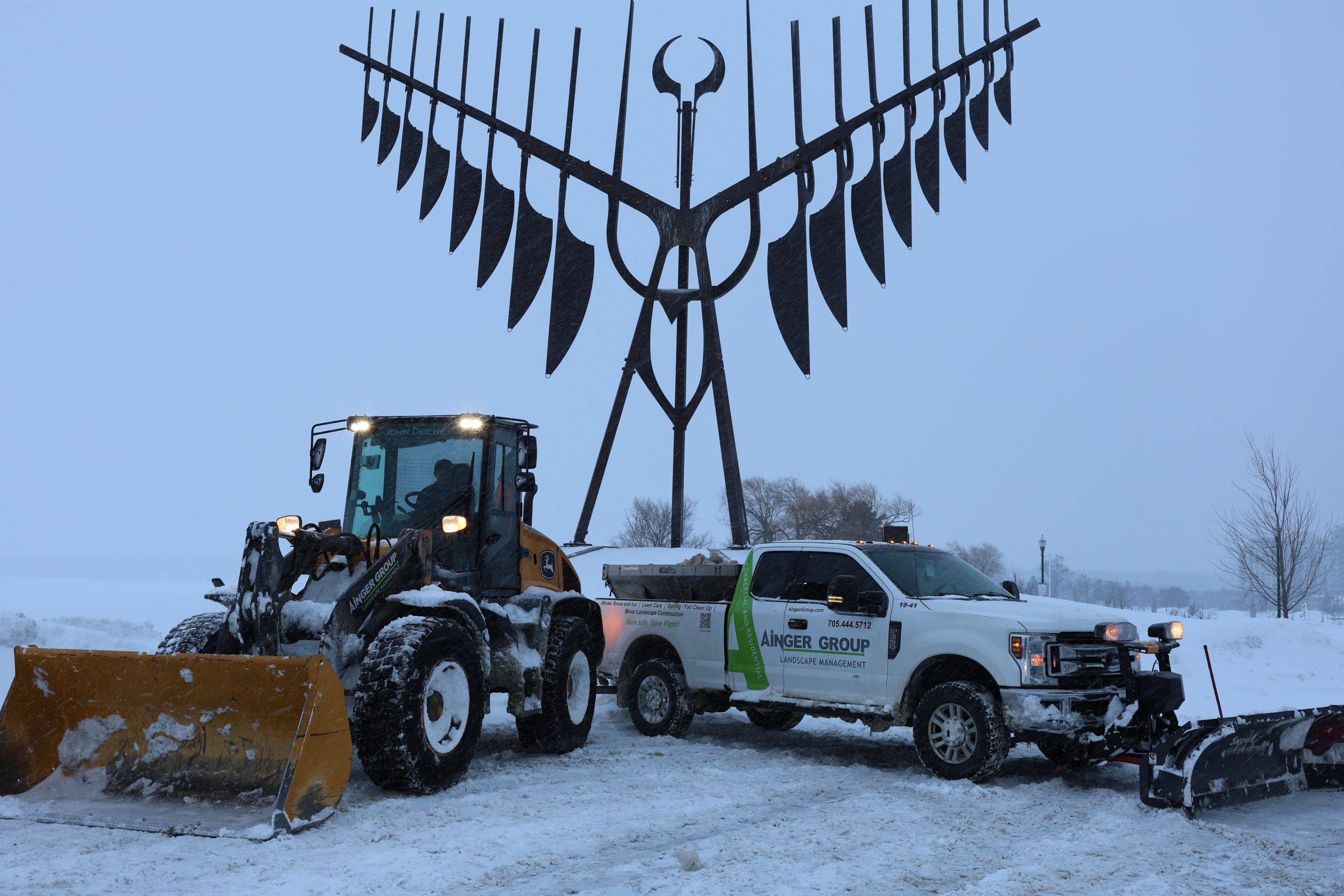
Commercial snow plow truck in Barrie, Ontario
Look for Service Documentation
Documentation gives property managers a record of winter activity.
A commercial snow contractor may track:
- Service dates
- Arrival times
- Departure times
- Weather conditions
- Areas serviced
- Ice-control applications
- Site observations
- Additional requests
Property managers can use those records to review service throughout the winter.
Documentation also makes future planning easier.
For example, records may show that one entrance regularly needs more attention after drifting snow.
That information can improve the next winter plan.
Understand the Pricing Structure Of Commercial Plowing Services
Price matters, but property managers should understand what creates the price.
Commercial snow contracts can use several pricing structures.
These may include seasonal pricing, per-push pricing, per-event charges or separate pricing for certain services.
Before signing, ask:
- What does the base price include?
- Does snowfall depth change the price?
- Does ice management cost extra?
- Does snow hauling carry a separate charge?
- Do return visits during a storm affect billing?
- Does the agreement include minimum charges?
- How does the contractor handle unusual storms?
Do not compare only the total at the bottom of the page.
Compare the assumptions behind that total.
A lower quote can cost more later if the contract excludes services your property needs.
Check How the Contract Handles Ice
Plowing removes snow, but winter property management does not stop there.
Melting snow can refreeze.
Vehicle traffic can pack snow into slippery surfaces.
Temperature changes can create icy areas long after the storm ends.
Ask whether the contract includes ice control and what triggers that service.
Also ask which areas receive treatment.
Parking areas, entrances and pedestrian routes may require different approaches.
Later this season, we will dig deeper into commercial snow and ice management. For now, make sure the contract clearly explains where plowing ends and ice management begins.
Ask About Backup Plans
Equipment breaks.
Storms run longer than expected.
Multiple properties may need attention at the same time.
A commercial plowing service should have a plan for those realities.
Ask what happens if the primary truck cannot complete the route.
Also ask how the contractor handles large storms that require extended service.
You do not need every operational detail.
However, the contractor should show that the plan extends beyond one truck and one driver.
Compare Commercial Plowing Service Contracts With the Property in Mind
Property managers sometimes compare snow contracts line by line without first considering how their building operates.
Start with the property instead.
Think about:
- Business hours
- Employee arrival times
- Customer traffic
- Delivery schedules
- Overnight operations
- Weekend activity
- Emergency access
- Snow storage capacity
Then compare each commercial plowing service against those needs.
A contract that works well for an office building may not suit a busy plaza or industrial property.
The best plan fits the site.
Questions to Ask Before Signing A Commercial Plowing Service
Before choosing a contractor, property managers should have clear answers to these questions:
What areas does the agreement cover?
When does plowing begin?
How does the contractor handle ongoing snowfall?
Which areas receive priority?
Where will crews store snow?
How does ice management work?
How does the contractor document service?
Who handles communication during storms?
What equipment will service the property?
Happens if equipment fails?
What charges fall outside the regular contract?
A strong agreement should answer those questions before winter.
Commercial Plowing Service in Barrie
September is a good time to compare commercial snow contracts because property managers still have time to inspect sites, clarify priorities and ask questions.
Once the first major snowfall arrives, those conversations become much harder.
Ainger Snow Removal provides commercial snow removal in Barrie for businesses and commercial properties that want a clear winter service plan.
You can also review our broader commercial snow removal services to see how plowing fits into a complete property-management strategy.
For practical winter planning information, commercial snow insights and updates from our team, follow Ainger Group on LinkedIn.
If you are comparing snow contracts for the coming season, contact Ainger Snow Removal to discuss your Barrie property before winter arrives.