How to Compare Snow Removal Companies Before Signing a Contract
Posted on 15 September 2026
Choosing between snow removal companies can feel straightforward at first. However, similar-looking quotes can represent very different levels of service.
For commercial property managers in Barrie, price should only form one part of the decision. Instead, compare how each contractor plans, communicates, documents service and responds during difficult storms.
A clear comparison now can prevent confusion once winter arrives.
Start by Comparing What Snow Removal Companies Actually Include
First, compare the scope of each proposal.
One contractor may quote parking lot plowing only. Meanwhile, another may include sidewalks, loading areas, entrances and ice management.
Therefore, property managers should compare services line by line.
Look at parking areas, drive lanes, fire routes, accessible spaces, loading zones, sidewalks, entrances and snow storage.
In addition, confirm whether the contractor includes salting or treats it as a separate service.
The lowest quote may simply include less work.
As a result, comparing only the final price can create a misleading picture.
Ask Snow Removal Companies About Their Service Triggers
Next, ask when crews actually respond.
Snow removal companies may use different snowfall triggers. Therefore, two contracts can create very different results during the same storm.
For example, one contractor may begin service after a set amount of accumulation. Another may make several passes during an ongoing snowfall.
Property managers should also ask how the contractor handles drifting snow, freezing rain and municipal windrows.
In addition, ask whether crews return after the storm ends.
A clear trigger gives both sides the same expectations.
Without that clarity, disagreements can begin during the first major snowfall.
Compare Snow Removal Companies by Their Storm Response Plan
A contractor should have more than a fair-weather plan.
Barrie can experience long snow events that continue for many hours. Therefore, commercial properties may need repeated service throughout the storm.
Ask how the company handles prolonged snowfall.
For example, does the crew maintain main drive lanes first?
Does the contractor return later for a full cleanup?
Also, how does the company prioritize emergency access, accessible parking and loading areas?
A strong snow removal plan should reflect how the property operates.
As a result, property managers should explain business hours and traffic patterns before signing.
Look at the Equipment Each Snow Removal Company Uses
Equipment matters because properties vary.
A plow truck may handle long drive lanes efficiently. However, a loader may work better when snowbanks grow or heavy accumulation builds.
Meanwhile, compact equipment can handle tighter areas.
Therefore, ask each company what equipment will normally service your property.
Also ask about backup equipment.
Machines need maintenance, and breakdowns can happen during storms.
As a result, a contractor should have another option if a primary machine goes down.
The goal is not to choose the company with the biggest machine.
Instead, choose a company with equipment that fits the property.
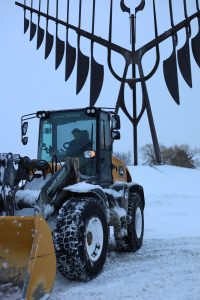
Commercial snow removal loader operating in Barrie, Ontario
Ask Snow Removal Companies About Insurance and WSIB
Commercial property managers should also review contractor credentials.
Ask for proof of commercial liability insurance.
In addition, confirm whether the contractor maintains appropriate WSIB coverage where required.
These details matter because commercial snow work involves vehicles, equipment, employees and public areas.
Therefore, property managers should not rely on a verbal assurance.
Ask for current documentation.
A professional contractor should understand why commercial clients need this information.
Compare How Snow Removal Companies Document Their Work
Documentation can become extremely valuable during winter.
For example, property managers may need to confirm when crews arrived, what areas they serviced or when they applied ice control.
Therefore, ask what records the company keeps.
Useful service records may include arrival times, departure times, weather conditions, areas serviced and ice-control applications.
In addition, crews may record unusual site conditions.
That information helps property managers monitor service throughout the season.
Also, documentation creates a clearer history if questions arise later.
Communication Should Matter When Comparing Snow Removal Companies
Storm communication can reveal a lot about a contractor.
Before winter begins, property managers should know who handles questions and service requests.
Likewise, contractors should know who can approve additional work.
This structure prevents conflicting instructions.
For example, a tenant may request extra clearing. However, the property manager may control contract changes.
Therefore, both sides should establish a communication process before the first storm.
Also, ask how the company handles urgent issues outside normal business hours.
Snow rarely falls on an office schedule.
Ask How Snow Removal Contractors Set Priorities
Every commercial property has priority areas.
However, those areas vary by business.
A retail plaza may prioritize customer entrances and accessible parking.
Meanwhile, an industrial property may need loading docks and employee access open early.
Therefore, explain the property’s priorities before comparing contractors.
A snow removal company should understand which areas matter first.
In addition, those priorities should influence the service plan.
The contractor should not have to guess during the storm.
Compare Snow Removal Companies on Snow Storage Planning
Snow storage becomes more important as winter progresses.
Early snowfalls rarely create major space problems. However, repeated storms can quickly change the property.
As snowbanks grow, they may reduce parking, block sightlines or narrow entrances.
Therefore, ask where crews plan to push snow.
Also, ask what happens when those areas fill up.
A contractor may use loaders to stack snow higher.
Alternatively, the site may eventually need snow relocation or hauling.
Planning those options early can prevent a mid-winter scramble.
Do Not Ignore Ice Management
Snow removal and ice control solve different problems.
Plowing removes accumulated snow. However, melting and refreezing can still create slippery surfaces.
Therefore, compare how each contractor handles ice.
Ask whether the contract includes salting.
Also ask which areas receive treatment.
For example, entrances and pedestrian routes may need different attention than open parking areas.
In addition, confirm how the company handles changing temperatures after a storm.
A complete commercial plan should consider the property after the snow stops falling.
Ask for References
References can provide useful context.
However, ask for references from similar commercial properties when possible.
A contractor who performs well on a small site may still face different challenges on a large plaza or industrial property.
Therefore, ask about properties with similar size, traffic and service needs.
Also, pay attention to reliability and communication.
Equipment matters, but consistent service matters more.
If possible, ask references how the contractor handled difficult storms.
Those stories often reveal more than a polished proposal.
Compare the Contract, Not Just the Sales Conversation
A good conversation helps.
However, the written agreement should still match what the contractor promised.
Before signing, review the contract carefully.
Check the service scope, snowfall triggers, pricing structure, additional charges and communication procedures.
In addition, review cancellation terms and contract length.
Ask questions about anything that feels unclear.
Therefore, do not rely on assumptions.
If something matters to your property, make sure the agreement addresses it.
Price Still Matters
Of course, price matters.
Commercial properties still need to work within a budget.
However, the cheapest proposal does not automatically create the lowest total winter cost.
For example, one quote may exclude ice management or snow hauling.
Another may include broader service.
Therefore, compare what each price actually buys.
Also, ask how the company handles unusually large storms.
A clear pricing structure makes budgeting easier.
Meanwhile, vague extras can create surprises later.
Look for a Contractor That Understands Your Property
A good commercial snow contractor should ask questions.
The company should want to understand operating hours, traffic patterns, loading schedules and priority areas.
In addition, crews should know where they can safely store snow.
A contractor who studies the property before winter can create a stronger plan.
Therefore, a pre-season site review has real value.
It gives both sides time to identify curbs, islands, hydrants, loading areas and obstacles before snow hides them.
Snow Removal Companies Should Plan for More Than One Type of Storm
Ontario winter weather changes quickly.
One storm may bring light powder.
The next may bring wet snow, wind and rapidly falling temperatures.
Therefore, contractors need flexibility.
A single plow truck may handle routine clearing well. However, larger storms may require loaders, additional trucks or repeated passes.
Likewise, temperature changes may increase the need for ice control.
Property managers should ask how the company adjusts its plan as conditions change.
That answer can reveal whether the contractor manages winter actively or simply reacts after problems appear.
A Simple Checklist for Comparing Snow Removal Companies
Before signing, make sure you can answer these questions:
- What areas does the contract cover?
- What snowfall triggers service?
- How does the company handle long storms?
- Which areas receive priority?
- What equipment will service the property?
- Does the company have backup equipment?
- Does the contractor carry suitable insurance?
- Can the company provide WSIB information where applicable?
- How does the contractor document service?
- How will you communicate during storms?
- Where will crews store snow?
- How does ice management work?
- What costs fall outside the regular agreement?
- Can the contractor provide relevant commercial references?
If a proposal leaves several of these questions unanswered, ask for clarification before signing.
Comparing Snow Removal Companies in Barrie
Ultimately, the best contractor should fit the property, not simply offer the lowest number.
A strong commercial winter plan combines clear communication, suitable equipment, service documentation and realistic storm response.
Therefore, Barrie property managers should compare contractors before the first major snowfall creates urgency.
You can learn more about commercial snow removal in Barrie and how Ainger Snow Removal plans service for commercial properties.
In addition, follow Ainger Group on LinkedIn for winter property-management tips, snow-removal insights and updates from our team.
Ready to plan winter service for your commercial property? Request a commercial snow removal quote.